Alex da Silva died on the basketball court playing his favourite game. 30/12/2019 HAPPY NEW YEAR TO NOBODY ~ He was aged 45, (a mere 'Toddler') but he was a winner to the end. We, his family, friends and me are all so very shocked of his departure. He died of an aneurysm to the brain and it was instant.
Death is so final....his passing leaves such a massive hole in my heart. Today, I have just returned from his home town of Mindelo in Sao Vincent island of Cabo Verde. I went essentially to hug and kiss his Mother, Eloise who has played such an important role in Alex's life and to meet his friends, Julio, Eloise and partner Morello (the architects), Tony (the dancer) and Miriam his beautiful wife at their cafe in Mindelo and his assistant Edison. Edison is so cool.....he wonders around Mindelo in a daze, the loss is so great. I wanted to see how Alex lived and who loved him as I did. When last we spoke on Skype he said, "Look Joe, I am living the DREAM!" So I just wanted to see that dream for myself....Sadly, he leaves behind his Dutch partner, Ganner and their six year old daughter Odilo.
Like all the islands in Cabo Verde, Mindelo is by the sea and every day I was there I went out secretly at 5.30am before the street dogs start barking, down to the harbour to pick up shells that the sea had brought in.....picking from the sandy beach pockets full of shells....and I would take them back to Alex's Gallery, "ZERO POINT" and put them outside the door as if the sea where giving these presents to Alex in his passing...so emotional and plenty of tears shed in the past two weeks...the personal loss to me is immense. He was a brilliant personal guide when it came to African Art and a great friend that never judged me, just stirred me right. I am going to miss him madly.
I am preparing to write his Obituary for the New York Times, The Guardian and the Huffington Post...I just hope they accept them....His passing is HUGE in regards to AFRICAN ART.
The Cultural Minister of Cabo Verde was a good friend of Alex's and has asked me to write a biography of his life....we will see. I will keep you posted.
Blessings to you all from Alex da Silva XX
Please read my post on the SLAVE MONUMENT in ROTTERDAM ~ ALEX'S MASTERPIECE
(This needs editing, it is not perfect but the sentiment of Alex and me is there...I really respected him and loved him as an ARTIST and as a MAN....)
BEN ENWONWU Nigerian 1921-1994 CHRISTINE signed and dated 1971 (lower left) oil on canvas 76.3 by 61cm., 30 by 24in.
Condition Report
Cataloguing
Provenance
Acquired directly from the artist in 1971 Thence by descent
Exhibited
Lagos, Exhibition Centre, Management Consultant Services Ltd. presents Professor Ben Enwonwu's Paintings and Sculptures, 23 May-6 June 1974, illustrated in the catalogue, cat no. 56A, titled 'Mrs. Christine Davis'
Catalogue Note
Spanning
close to 60 years, Ben Enwonwu’s artistic career followed one of the
most important periods of Modern Nigerian history; the journey from a
British colony to a newly independent African nation. Nigeria gained
independence from the United Kingdom on 1 October 1960, and with it the
country was in search of a new post-colonial identity. Ben Enwonwu MBE
became an advocate for a new Nigerian national culture and a pioneer of
African modernism. By his passing in 1994, the artist was, and would
continue to be, considered one of the most revered African artists of
the 20th century. Ben Enwonwu was born in
1917 in Onitsha, eastern Nigeria, to a mother who ran a successful
textile business and a father who was a retired technical assistant and a
reputable sculptor, from whom the artist learned his early carving
skills. In addition to being an acclaimed painter and sculptor, the
artist was also a distinguished writer and art critic. Enwonwu
studied fine arts at the Umuahia Government College in 1934, before
receiving a scholarship to study in the UK in 1944, where he attended
Goldsmiths College and the Slade School of Fine Arts. During this time,
he studied European art movements such as Symbolism and Fauvism. Ben
Enwonwu’s mastery in combining European techniques and traditional Igbo
aesthetics is central to his artistic oeuvre. Enwonwu returned
to Nigeria in 1948 to begin his federally appointed position of Art
Adviser of the Colonial Office. The artist continued his practice in
Nigeria and in 1949 was declared by Time magazine as ‘Africa’s Greatest
Artist’. The present lot was painted in 1971, the same
year that Enwonwu was appointed the first professor of Fine Art at the
University of Ife. Assuming this position in the wake of the Biafran War
(1967-1970), Enwonwu sought to expose his students to ideas of national
reconstruction and reconciliation and the effect of this tense civil
war on Nigeria’s post-colonial cultural identity. Enwonwu
produced some of his most accomplished works in the years directly
following the end of the war, including the four known portraits of
Adetutu Ademiluyi (known as Tutu), a Yoruba princess from the ancient
Kingdom of Ife and this portrait of Christine. Painted just prior to
Enwonwu’s famed portraits of the Yoruba princess, Christine is a
clear precursor to these works. The present lot bears an especially
close resemblance to Enwonwu’s most famed portrait of Tutu, the
whereabouts of which are currently unknown. While Enwonwu is well-known
as a portraitist, portraits of this high calibre are exceedingly rare. Christine
herself was born in New York, the step-daughter of a renowned Ghanaian
lawyer. In her early twenties, she moved back to Ghana to reside with
her stepfather before relocating to Lagos, Nigeria in 1969. In Lagos,
Christine and her husband Elvis developed a close friendship with the
artist. Commissioned as a gift to the sitter, the present lot is a
product of the friendship between Ben Enwonwu, Christine and her
husband. Known for her elegance and dignified beauty, Christine had the
innate ability to stay composed and immobile for as long as the artist
required. Enwonwu’s loose brush strokes and vibrant oil captures
Christine transient beauty. The portrayal of her long-neck, glowing
skin, curved lips and delicate smile are testament of the warmth and
grace of the sitter. Her devotion and composure are conveyed in the
portrait and is a testament of the trust and complicity between the
artist and Christine. The similarities between Christine and Tutu are
striking. Stylistically, the artist employs similar techniques in both
works, a mixture of clearly defined and loose brushstrokes. Christine,
in the present lot, sits up tall and elegant, there is a subtle emotion
conveyed through her gentle Mona Lisa-like smile and a sense of ease in
her eyes which emanates to the viewer. Christine and Tutu are
bonded, especially in the dignified presentation of both figures,
translated through their embodiment of a regal posture and authority of a
statesman. This regal and dignified pose is highlighted in both Christine and Tutu,
as both sitters share a mesmeric frontal gaze, along with their torsos
both positioned in an outward and angular manner, as present in
historical Western paintings. There is also backlight present in both Christine and Tutu.
In both portraits, the light takes on a luminescent character,
emphasizing the unique features of both subjects, chiefly the elongated
necks, a feature recognisable in Enwonwu’s work. The light in both works
forms a halo, and giving both Christine and Tutu a delicate, yet
iridescent and angelic glow. Christine is said to have
had a great appreciation for different cultures which she encountered.
Being a stylist, she sought to express herself through the traditional
attires of the locals. This is further reinforced in the present lot,
where she is depicted wearing a beautifully tied headscarf called ‘gele’,
which signifies her married status. Although Christine was not born in
Lagos/Nigeria, her attire shows her affinity with the region and a and a
deep respect to West African tradition. -----
AFRICA | CULTURE IS BOUGHT AND PAID FOR | MAKE NO MISTAKE, ART IS POWER!! AFRICAN ART IS NOT ABOUT PORTRAITS OR STILL LIFE BUT STILL, HERE WE ARE?
THIS NON CONFRONTATIONAL ARTIST, THIS CREATIVE COCONUT IS THE BEST OF NIGERIA? WHAT FOOLISHNESS, WHAT DISHONESTY, WHAT LIES WE SHARE AS WE SLIP UNDER THE UGLY SHEETS OF (S)HELL.
HOW IS IT THAT NATIONAL TRAITORS CAN BECOME NATIONAL TREASURES? TO LEARN FROM THE OPPRESSORS TO BECOME THE OPPRESSOR. THE FORCES BEHIND THIS UNJUSTIFIED SUCCESSFUL RISE ARE PURE EVIL; SO EXTREMELY WHITE. MONEY TALKS AND BULLSHIT WALKS, EVERYBODY LOVES THE COLOUR OF MONEY ~ GREEN CAN MAKE A HISTORY OF YOUR CHOOSING, SO BUY YOUR WAY IN AND START WRITING....(Mona Lisa; Money Lease-Her more like. Who-bought you? No refunds Mista. No funs here. 'Pay or Go-way' Policy of Sotheby's).
NIGERIANS ARE NO FOOLS, THEY WILL SEE RIGHT THROUGH YOU ALL. THE ELITE CAN HIDE BEHIND FOREIGN AID BUT TIME WILL TELL. LIARS WILL BE EXPOSED AND THE TRUTH WILL OUT IN AN ORAL CULTURE. THE DRUMS ARE BEATING AND THE MASKS ARE TALKING FROM BENIN BRONZES TO COLONIAL CONFORMIST ARTISTS, MAMA WATA???
In ‘Committed to the Medium,’ Valerie Kabov
considers the rise of new painting from Zimbabwe. This article is
available in full in the most recent ‘Painting’s Not Dead!’ (13.4) issue
of ARTsouthAFRICA, which is the final edition of the magazine
you have known and loved for over thirteen years. Look out for Kabov’s
article, titled ‘Who’s Afraid of the Big Bad Global Art Market’ in the
upcoming, inaugural edition of ART AFRICA!
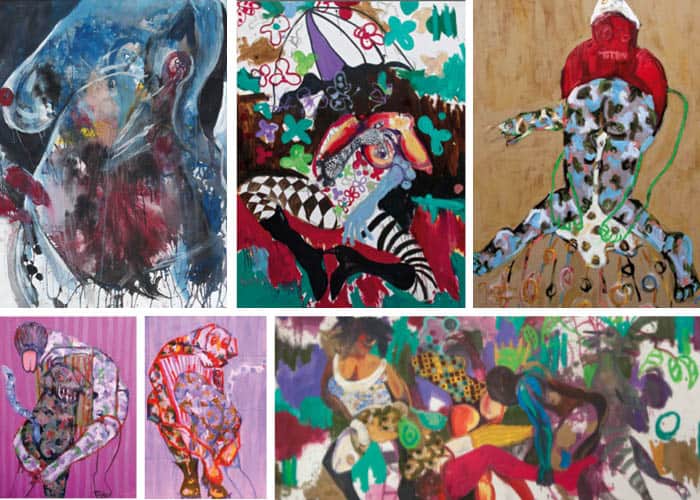
CLOCKWISE FROM TOP LEFT: Mavis Tauzeni, Eve’s Diaries Pt 4, 2015. Acrylic on canvas, 180 x 160 cm; Wycliffe Mundopa, Paradise of Vice, 2015. Oil on canvas; Gresham Tapiwa Nyaude, Love Pirates part 1, 2015. Oil on canvas; Wycliffe Mundopa, Myths of Harare (Drowning in air), 2014. Mixed media on canvas, 178 x 235. 5 cm; Gresham Tapiwa, Nyaude Dog’s Life Part 2 & 1, 2015. Oil on canvas, 180 x 210 cm. All images are details. All images courtesy of First Floor Gallery Harare.
At the recent art fairs in Cape Town
and Johannesburg this year, there was something almost peculiar in the
cornucopia of art offerings from around the continent; the significant
presence of Zimbabwean artists on the South African art scene. This
presence has extended so much so that Zimbabwean artists Gerald Machona
and Kudzanai Chiurai represented South Africa internationally at the
recent 56th Venice Biennale. Zimbabwe’s close proximity to
South Africa cannot fully explain the prodigious flowering of talent in a
country with a population of only fourteen million, whose economic woes
have decimated its arts education, resulting in the absence of even a
single internationally recognised Fine Art degree programme.
Of particular importance is the
emergence of painters from Zimbabwe. Misheck Masamvu has become an
established name in South Africa, represented by Blank Projects and
presented at art fairs by Goodman Gallery. Artists like Portia
Zvavahera, winner of the FNB Joburg Art Fair Prize (2015), and Richard
Mudariki have found themselves a permanent home. Given Zimbabwe’s
historical art reputation being cemented in stone sculpture practice,
the rise of painting is somewhat unusual. While sculpture still delivers
some heavy hitters, it is the ‘non–traditional’ and, as some have
argued, ‘non-indigenous’ medium of painting that’s creating excitement
in local and increasingly international art circles.
The conventional historical view is
that the missionaries introduced painting and sculpture in Zimbabwe in
the 1930s. Key to this introduction was Canon Paterson, who founded
Cyrene Mission School in 1939 in Bulawayo, and Father Groeger, founder
of Serima Mission. At both schools, young men were taught painting
skills with a view to decorating churches and religious paraphernalia.
Canon held the progressive view that given the opportunity African
artists could reach the same heights as Europeans. The generation of
artists that emerged from the Missions includes painters like Kingsley
Sambo, whose works are in the MoMA in New York. In 1957 Frank McEwan,
the first Director of the National Gallery of Rhodesia (now Zimbabwe)
established the studio workshop, sponsored by British American Tobacco,
which fostered the stone sculpture practice alongside painting. Still,
the medium was not viewed as entirely indigenous.
Zimbabwe’s introduction to
contemporary art came after its independence, with Gallery Delta’s Helen
Leiros and artists like Berry Bickle and Tapfuma Gutsa seeking and
promoting alternative ways of expression. Leiros in particular taught
and fostered modern art techniques and mentored artists of the born-free
generation, such as Lovemore Kambudzi, Misheck Masamvu, Richard
Mudariki, Virginia Chihota and Portia Zvavahera.
While this history is important, it
cannot explain the level of talent and quality of art production in
Zimbabwe; these are contiguous with and true property of the culture,
values and passions of the people and the times they live in. The medium
– painting, poetry, sculpture or music – is in many ways a matter of
convenience and availability. When conditions change so can the modes of
expression. At its core, Zimbabwean culture is characterised by an
ability to appraise life philosophically, with a measure of detachment
and a big picture view. This culture manifests in many aspects of
Zimbabwean tradition, from the immense importance of avoiding conflict
and preserving social relationships, to the sophistication and
conceptual structuring of Zimbabwean proverbs, monotheistic spirituality
and belief in the sacredness of human life. This culture underpins the
incredible perseverance and optimism of Zimbabwean people and continues
to inform the new generation of painters, arguably even more so than all
other artists. It can be said that presently in Harare, the medium of
painting reflects the tensions, the complexity and the arduous path of
the country better than any other available medium. Painting requires
idealism – technical, artistic and personal. While the new generation of
sculptors in Zimbabwe has, in many cases, opted for found and discarded
objects as a resource, inventing their own medium and the method, the
painters in Zimbabwe are required to forge ahead with technical,
artistic and personal idealism and sacrifice.
Given the cost and availability
issues, it is surprising that anyone takes up painting in Zimbabwe
today. When making one painting can cost the same as the artist’s
monthly rent, the choice between painting and eating becomes a real one.
Capitulating to these economics, art schools such as the National
Gallery Visual Art Studio or Harare Polytechnic have resorted to
teaching painting with acrylics and in some cases, even poster paints.
While some artists opt for print based techniques as an alternative,
there is a younger generation of doggedly committed to the medium. Among
those leading the charge are three young artists; Wycliffe Mundopa,
Mavis Tauzeni and Gresham Tapiwa Nyaude.
Through the works Misheck Masamvu
and Portia Zvavahera, audiences have come to associate new Zimbabwean
painting with powerful metaphoric figuration and bold gestural
statements in preference to finer detail. Although it is hard to speak
about a ‘Harare School’ or a movement emerging, this ethos of place also
informs the works of their younger colleagues, although each is making
their own very distinct thematic imprint.
For Wycliffe Mundopa, the Hegelian
dictum that art must be of its time and of its place is a most fitting
description. Few artists are more passionately committed to being in
Zimbabwe and sharing the pains and the struggles of its people than
Mundopa. “This suffering is what makes us,” is his motto and the
sentiment pulsates in each of his paintings, which spin like a whirlwind
through the underbelly of Harare’s high-density areas and pain-points.
His circus-like colours and twisted lines underscore the razor-sharp
social commentary on a world where entertainment and poverty are close
companions and where everything can be for sale. In his complex
compositions, Mundopa displays his depth of historical research and
admiration for the Dutch Masters, Rembrandt and Rubens in particular, by
making us feel that if they had lived in Harare today, this is exactly
what their paintings would look like. Mundopa’s recent show ‘Myths of
Harare’ at Commune 1 Gallery (in Cape Town) and the selection of
complementary works on paper at Ebony Gallery, (also in Cape Town) was a
runaway success, displaying for the first time Mundopa’s prowess in
tackling museum-size canvasses. We can only look forward to what happens
next for this prodigious talent.
Mavis Tauzeni produces, in many
ways, a counter-balance to Mundopa’s frenetic subversive carnivals. Her
canvasses are immersed in the unsettling stillness of introspection and
waters that run deep. Deeply personal, Tauzeni’s imagery oscillates
between the surreal, futuristic and dreamy. It bears some kinship to the
world of Wengechi Mutu, who Tauzeni cites as a role model. Yet despite
its surface otherworldliness, Tauzeni’s world is no less of a social
commentary, speaking implicitly and explicitly to the difficulties of
being a woman – and a woman artist – with an independent and individual
journey. While she speaks to the realities of her life in Zimbabwe, the
tones and sentiments engendered in her work are immediately empathetic,
not only to women but to all of us yearning to break out of convention
and social expectation. Tauzeni has already attracted attention for her
works on paper, having been acquired by the Fondation Blanchere
Collection in 2014, but the artist’s true passion is painting. Tauzeni
is ready to emerge as a painter of note, with a new exhibition at First
Floor Gallery titled ‘Eve’s Diaries’ and comprising major canvasses.
In stark contrast to Tauzeni and
Mundopa is Gresham Tapiwa Nyaude. While no less informed by the drama
and trauma of daily life in Harare than Mundopa, Nyaude’s practice is
the epitome of the tongue-in-cheek street smarts that characterise the
‘ghetto ethos’of his native Mbare. Visually translating slang and
vernacular, Nyaude works in waves to create series of obsessive,
thematic paintings, exorcising each subject to exhaustion before
subjecting a new victim to his keen wit. His past series include ‘The
Midnight Shoppers’ based on the invisible and undocumented night-life of
the Mbare ghetto; ‘Native Advertising’,’ which confronts us with how
the news and media manipulate perceptions of Africans and particularly
Zimbabweans, and how the media themselves are manipulated; as well as
‘Dog’s Life,’ in which dozens of gleaming canines stare down from
canvasses, their grimaces simultaneously accusatory, vindictive,
victorious and prevocational, the spectral allegory of the ‘ghetto
hustle.’ Nyaude has already garnered international interest, with works
from ‘Dog’s Life’ having been shown at SMAC Gallery early in 2015 and
‘Native Advertising’ currently on show at F2 Galeria in Madrid, as part
of a3bandas gallery festival in the Spanish capital.
Intellectually on point, emotionally
powerful and technically adept, this trio of emerging painters is not
to be underestimated. Together and individually, they are also role
models for their peers to emulate and given what we know about
Zimbabwean art and artists, there’s more to come.
Greetings from Royal Tunbridge Wells to Your Highness on this cold and frosty October morning.
I trust that you and "Venus Bushfires" are perfectly fine. So too are your glorious Princesses whom I assume are happy and content on this extremely rarely seen early morning.
I couldn't sleep well so I've just woken up. A small miracle for me to catch the dew in the hedgerows for lack of a garden. Flat living can be so tiresome. Gardenless and fruitless; sunshine so rare in these parts. It is far too
early for me. I am more of a night person, sleeping at dawn and waking at noon if you're lucky. I guess these are the advantages of being a childless man. Regardless of my daily habits, who in Africa cares? I have been thinking about your Opera and what is African Art? It, for
me, has become a cozy home, for those that don't quite fit the mold,
the misfits and the rejects. Those that want to confront rather than
conform. There has never been a more important time for the emergence of
the importance of African Art and I regard myself as an 'African Artist'.
The Continent has inspired me to think and be different, as I'm sure it
has you too. Things just seen in a completely different perspective and
that needs to be celebrated and understood. You and Helen are doing cultural marathons to show others this and the vast opportunities it brings.
I really love Helen's song "We Come in Peace", but to get full audience participation Venus Bushfires needs to
slightly simplify....be more like the football terraces and break it
down. Like 'OH AH CANTANA, OH AH CANTANA'... so what about "FREEDOM
GIVEN!.....FREEDOM TAKEN-AWAY!" - Do a Classic Trump on the Crowd, so all can feel included and nobody has
to have a good voice...it is more of a revolutionary chant....This is
truly a magical song, a mind opener for many, I being ONE!
I
do hope we can meet soon to discuss more. This subject never gets
boring for me. I woke this morning thinking how you switched from
English to Pidgin as Fred (Kingston Gallery Owner | Simon Fredricks) did with Jamaican Patwah at King's and realize it is a
'life-collide'. A journey for identity when the parameters in England are
so very rigid. I have seen this in my own cousins who I grew up with; now with
New Zealand, Australian accents, but I really thought it more a put-on but I realize it is more wanting
to be immigrated fully....In your case my dear friend, it is slightly different but
rather more exciting because you are living between worlds divided. I
wonder what your young girls, your wonderful Princesses, think of it all? They are going to be or already
are, so incredible.
You
have inspired me to write again and I want to find a rather different kind
of voice and wrote this, which should become a series of "Letters in the
Wilderness" ~ the wilderness meaning those not wanting to be
brainwashed by creative ideas of the West more inspired by those without artistic formulaic degrees, Masters of Fine Art or even Doctors with PhDs....I prefer to encourage the untrained, those Artistic Doctors Without Borders. Whether this is successful, only time will tell but it is worth building upon regardless.
The Pidgin Opera has inspired me..Tonight I have been teaching myself "Pidgin"....I really LoveitO....but
you can use the keyboard characters too...- | ~ } "" { .... and so the symbols mean something too...this is awesome...so inventive and linguistically malleable.
How on earth did Helen write her Opera, Mami wata GENIUS.
So this is my first go. Please do bare in mind I can only get better:
"How-u-dey?
Me-dey-fineO.
Wetin-be-u-dayO. Me no-sabi and me no~NO! Dash-me, Gi-me
CoffeeO. Me no-money, me no~friendsO…..
Wetin-dey-happen? Wahala no-dey stopO.
Me comot for safety, me comot for security. Who dem send you?
Me want chop, talkshop dayda k-leg customa. Come chop, abeg...make me no vex you...if you no gree, that-be fineO, Charlie~~~~"
Good luck with tomorrow/today perhaps with the Opera performance to 360 plus kids. They are going to adore you all.
KEEP being FANTASTIC.
May the Gods bless you richly.
Lots of love,
African Joe XXXX
Ps. If you didn't get a chance to see this because of Opera Commitments: Here are the highlights from the England vs All Blacks | Semi Finals
You have run beside me and at times held my hand metaphorically
but you have been a great support. What is African Art to me? When I was a
child I went to my primary school…First Day, I was given a small bottle of milk
with a blue straw…New to me for sure…but I saw the straw and I saw the girl's
ear and thought is this straw for that ear? Come on yes of course...it kinda fits…yes it does...makes sense...I don't need the straw, maybe she does? Maybe she has somehow misplaced hers and I really don't need mine. Yes, maybe she does need my straw afterall...let us see. I had been strategically placed in the high-chair and overlooked the other toddlers. I felt so powerful, an overwhelming sense of unearned privilege. I was seen as important by the group. I had to do something all their eyes where on me. So I
reached across and pushed the blue straw into the little girl's ear canal thinking it
was meant to be….'The Lady Oldie'…Wwwell she wrenched me out my high-chair with such familiar force and rushed me out the room…I WAS EXPELLED….I was
4 years old. It was the First day of my academic career. Clearly, I was a non-starter....
When I was five I pissed my bed like a drunkard that I am
now, in fact, aged 49, I piss my bed more now than ever before. I am known by some as the "Bedwetter of Royal Tunbridge Wells". I piss the bed
twice, if not three times a night just to make sure and in winter more to keep warm. Put I used to go on this
hateful “school run”…I would punch the driver in the back of the head for driving too slow
and again when he or she (dependent of school days) was driving too fast…I used to weep in the car every morning….and my school uniform stank of piss because I was
so sad..I never noticed myself but others said I stank…They tried to help but I would simply piss on them....SO MISERABLE….TO HAVETO LEARN FROM SUCH SELF RIGHTEOUS DO-GOODERS! I remember one day I went to the school and wanted to say goodbye to my
Mummy….and Mrs Gledhill held me back with both arms…So I punched her in the face and ran to
kiss my dear Mummy goodbye…Again EXPELLED ..aged 6 and three quatres. MYBAD….
It gets worse…
I joined the Cubs and I was 7 and then my very
famous AdMAN Dad, Stanley Pollitt, from Boase Massimi Pollitt went and died on
me at the tender age of 49 in 1979, I was 8 years of age and I remember walking
to the Sweetshop in Sussex after our weekly boring Sacred Heart Sunday Catholic Mass and saying to him,
“D-Ad you are 49, you will be an antique at 50…if you make it?” The next day he
was DEAD. Still to this day I feel my comments killed him…Bullet words from a
terrible bed-wetting ‘EXPELLED’ son. He tried to teach me to Box but never let
me punch him….he wanted to punch me to a pulp to teach me a lesson…A lesson in
what? Well, I did learn something…how to run from adults. I don't miss our so-called, "BOXING LESSONS" one bit.
Naturally as a young fatherless boy of 8, I started swearing. Well what else is there to do...FCUK.
"FUCK…FUCKERS..BUM-LICKERS, ARSE SCRATCHERS, NOSE PICKERS, SHIT, SCREW YOU….BUM, TITS, BIG TITS AND ASS. SPIT, FUCK,
FUCK, FUCK..COCK..COCK A DOODLE DOO...COCK...cock..cock..COCK..COCK...FUCK..FUCK..JESUS...CHRIST ALMIGHTY (pause for breath) CHRIST ALMIGHTY YOU FUCKING JESUS (that was my ulitmate 'crowd-shocker'!)"
Well, what a reaction from the Scout Hut.
Everybody was watching me now...I was virtually famous. Celebrity no less..the rudest boy in the room. The fact was that nobody had heard such a potty-mouth, the parents heard right away and I was excluded…No more jelly and ice-cream birthdays for little old me...No Sir ree... I was sent home immediately…EXPELLED YET
AGAIN…but all I wanted was for others to feel as angry and upset as I felt about
losing my favourite dear AD/DAD…BMP | “SMASHED GET SMASHED” and he did….The
silly potato-head.
It gets worse
To be continued.....
Anyway Luke, just thought I’d touch base.
Hope that your
childhood was worse than mine…I have plenty more to offer.
Big Kiss,
YOU ROCK…..STAR.
Yours sincerely,
Master Joseph Pollitt | 3rd Grade Student, Bottom Set and Sinking Fast
It's been a hard days night but um feeling quite all write. Had another tough two weeks, facing kite-surfing Wendy at the office..."Windy-Wendy"..Thatz what we 'Kool Kids' call-her. Let me share with you an'ickle Jackanory 'bout my hard-working weak......
And back to the writing, back to the rhythm. The sounds of the Underground, the blasts from the past, slowly waking up to join me in my-writing. Adjust can't sleep, too excitedO. Me be me, wear me is free, look, finally let-it-be, as-eye-is clearly accepted. I can dance O, Lieca camel whithers humps, lumps and teddy-bear paws. This feels good. This feels right, like I've been herO....Wwater bumbum. Just slide on in to the other-side, cultural butterfly spreading her beautiful wings. Neither this nor that can touch me now. I have found my tapping feet, my neck-nodding up and down and side to side hitting every beat.....as I slide on in to the other-side. Where rigid conformity and gentile formality are calmly swept under the rug. Lucy goosey is on her way going. It's been awhile since I have opened up like this two-YOOOOHOOOO! Busy pushing into third, then fourth, fifth and looking for my sixth gear. Riding in my mind, smoked filled razor-blades scratching at the sides of my eyes, opening the lids to see what others see when they read me...WRITE....
Nothing but confusion as I givea shout-out with some catchy little soundbites and slogans from the past; a grey haired porcupine with sharp-spike-spikes, waving all her weapons proudly in the air, letting off the bullets that shower without sponge, without soap, without Wwater bumbum. So you too can feel me thumping, banging out her beats, roaring out for loners, for losers, for rejects, for misfits, wherebe the ne're-do-wells...coz we wanna NO! There rizza seat with your name in-it, park your rump down and Abba rest in peace.. A creep-ona-seat, sitting sniffing at my feet.....YOU ARE WELL-COME!
Wotz the sense of making sense when incense is taking up the room. Nothing said, nothing spoken, all is quiet....ALL IS BRIGHT.... All clear on the Western front, back-off, theres nothing to see here people, absolutely no message meant. Make your way to the doors, find your closet exit and make like-a dove with three wings and leave. These golden years are priceless, the aches and pains of age are quickly fading as I type. Wot write have you to be here? No right at all, that's why it feels so dangerously WRITE .
Meet four a-pint or five depending on the outcome of the second part of the third Act. Put your best frock-on and let's boogy-baby, want-some? Till then stay as you are. What, no Wedding--ring? Don't change a thing. Stay just as you are, I'm off-too guitar-car.
All my warm fuzzy winky-wanky-wooes,
Uncool Joey XX
P.s. Howz Foam-at-the-mouth-Bob and Sightseeing-Simple-Dimple-Seaman-Simon, be sure, be absolutely certain this time, to send them my LOVE! Tata
"THIS IS NOT GOOD FOR
AFRICA....NO GOOD...THE ARTISTS ARE ALL FALLING INTO COLONIAL
TRAPS...BLEACHED FOR A WHITE ART MARKET...HOW IS THIS AFRICAN ART?
NO....NO..NO THIS IS JUST NOT RIGHT...IN FACT, IT IS DISHONEST!
It
must be understood that South Africa is an entity unto itself. The
people of South Africa do NOT look up to Africa, they look up to Europe
and the US. They are totally obsessed with qualifications; most have
MFAs, PhDs even.....they have all been played for years. They are the
children of the "Abused"...these Artists can hardly reflect a complex
Continent as Africa. In their minds they are NOT African....they are
struggling to find what they are....but the answers do NOT lie in the
corridors of formal Colonial Institutions and between the pages of exam
sheets. The artists are just paying lip service to the old regime. Has
anybody seen the TOWNSHIP ARTISTS? This is where the life blood of South
Africa runs......devoid and uncontaminated from Institutional
Education. This is a huge subject which is just being skimmed upon and
represented so poorly in these pathetic toxic Art Fairs....
On
reflection, I guess these Artists do represent the Continent but in
ways I hadn't considered before. Is Africa going to be constantly ruled
by others? Is it going to be valued by what some outside exam board
thinks of them or what such established sites as Somerset House or the
British Museum say? The question is rock solid and hits at the heart of
the
matter....Who is to define the Continent? Are African Nations created by
the Collectors behind closed doors in Auction Houses? Let us be clear
here, it is the money that shapes the Cultural
Independence of Nations. That being the case, then "Independence" really
does mean absolutely nothing. Art is Power, it shows others what the
individuals of all the different 'made-up' countries of Africa, are
worth. It expresses the values held by Nations, so Art, in essence, is
far more than just objects strategically placed or blobs of paint on
prepared canvases, neatly framed.
Are we to support those that have
bought their tickets via Western approved degrees and further
educational qualifications, which can be marked down by those that have
the audacity to declare others, "Uncivilized"? The beauty of African Art
is it's openness, it's glorious primitive unpredictable nature. Sadly,
the Continent is still being controlled by vulgar outside forces. So we
have a parallel in place and it is rich vs poor, groomed vs
independent. If the Continent is to be truly free then it must be
defined by the authenticity of untrained artists? The financial
investments paid out by the Artists, has so far paid off, but that is
to the detriment of an entire Continent. Those with their tickets are
only holding up the rest, creating barriers for the determined honest
artists. The only country to grasp this concept is
Nigeria...the rest of Africa are decades behind and some may never
change. The rigid white frameworks that has been put into place and will
never allow it to be altered; there is simply too much at stake. What we
are witnessing today are just white masks on black faces.
I guess what I am trying to point out and fearful of is that perhaps, just maybe we are listening to the Rong Radio Station...
Personally, I would like to pay tribute to the greatest contributor to Africa. May the Gods Bless BISI SILVA. They broke the mold when they made you....you are one in a billion. XX"
these four women are changing the face of modern african art
"We’re
moving towards a time where we want a contemporary art world to be more
inclusive. I don’t think there’s a way back from this, it’s now and
it’s a reality.”
Whether
in fashion, music, or contemporary art, interest in work by creatives
based on, or hailing from, the African continent has never been greater.
But while the interest may be there, there are still relatively few
formal platforms dedicated to showcasing Africa’s artistic output. Where
contemporary art is concerned in particular, major fairs
disproportionately spotlight galleries and artists based in, or with
easy access to, more traditional art centres. There are of course
exceptions, but it was this general sense of infrastructural
disadvantage that encouraged Touria El Glaoui to found 1-54 London:
a contemporary African art fair held yearly at Somerset House over the
October Frieze weekend. “From the start, I had a mission to create the
platform for artists from the continent and the African diaspora,” she
reflects. “It was a response to the lack of infrastructure and voice for
these artists. We wanted to gather as many artists from the continent
as we could, and ensure that they are part of the narratives and
discourses around contemporary art that weren’t including them.”
Now
a key stop on the circuit for collectors, curators and fans of
contemporary African art, 1-54 has undergone exponential growth in seven
short years. It now hosts fairs in New York and Marrakech. But, as
discussions about the treatment of diversity and inclusion as trends
increase, is there a reason to worry that the current fever for African
art could be all but a passing fad? “I don’t really like the use of the
word ‘trend’ with regard to what we do. It would be unfair, in today’s
world, to deal with a contemporary art scene that doesn’t include
African or African American artists,” Touria tells i-D. “I think the
outlook is a good one: we’re moving towards a time where we want a
contemporary art world to be more inclusive. I don’t think there’s a way
back from this, it’s now and it’s a reality.”
As this year’s
edition wraps up, we take a look at some of the most exciting artists
whose work was shown at the fair, offering Western audiences an insight
into the wealth and calibre of African art.
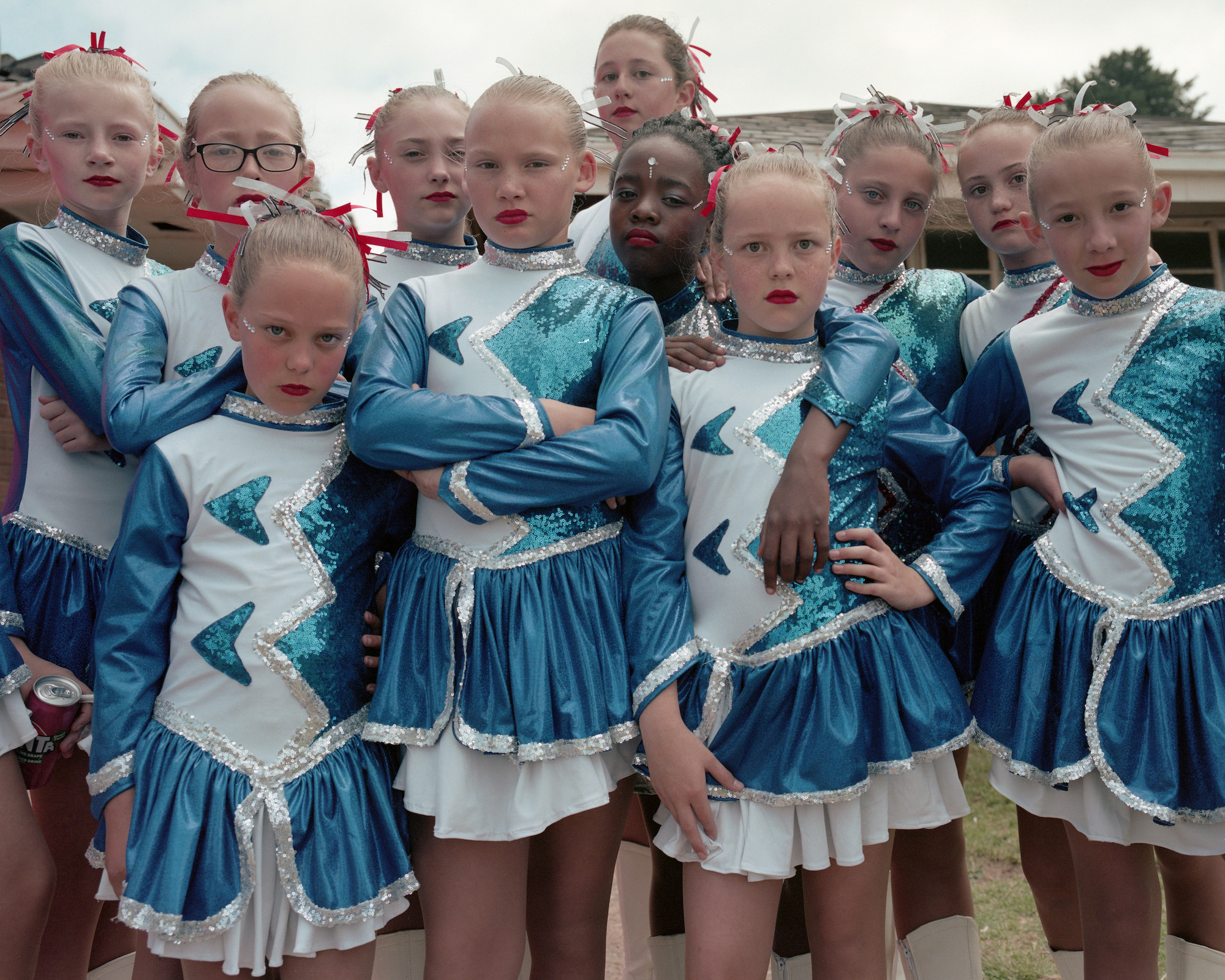
Known
for her portraiture essays that put the collaborative nature of both
image-making and identity-making in focus, Alice Mann is quickly rising
the ranks of fine art photography. Her series Drummies
(2018), documenting young South African drum majorettes, many of whom
hail from some of the country’s most disadvantaged communities, earned
her the Taylor Wessing Portrait Prize in 2018. It was the first time the
prize has been awarded to a series rather than a single image. This
year, she picked up the Photography Grand Prix du Jury at the Hyères International Festival.
Capturing her subjects with a warm frankness, her work gives voice to
the importance of community in building an individual identity. “I’ve
always been interested in exploring how being part of a community offers
people a sense of belonging, and I think being able to find that space
is incredibly important… the need to belong is a feeling we can all
relate to,” Alice tells i-D. “‘Being part’ of a community really
embodies what collaboration is about… you are linked to other people in
some way, working together, having a common cause in mind. From my
experiences working with various groups of people, it’s been amazing to
witness how belonging to something, and being part of a community can
actively reinforce both group identity, but also positively affirm an
individual’s sense of self within that.”
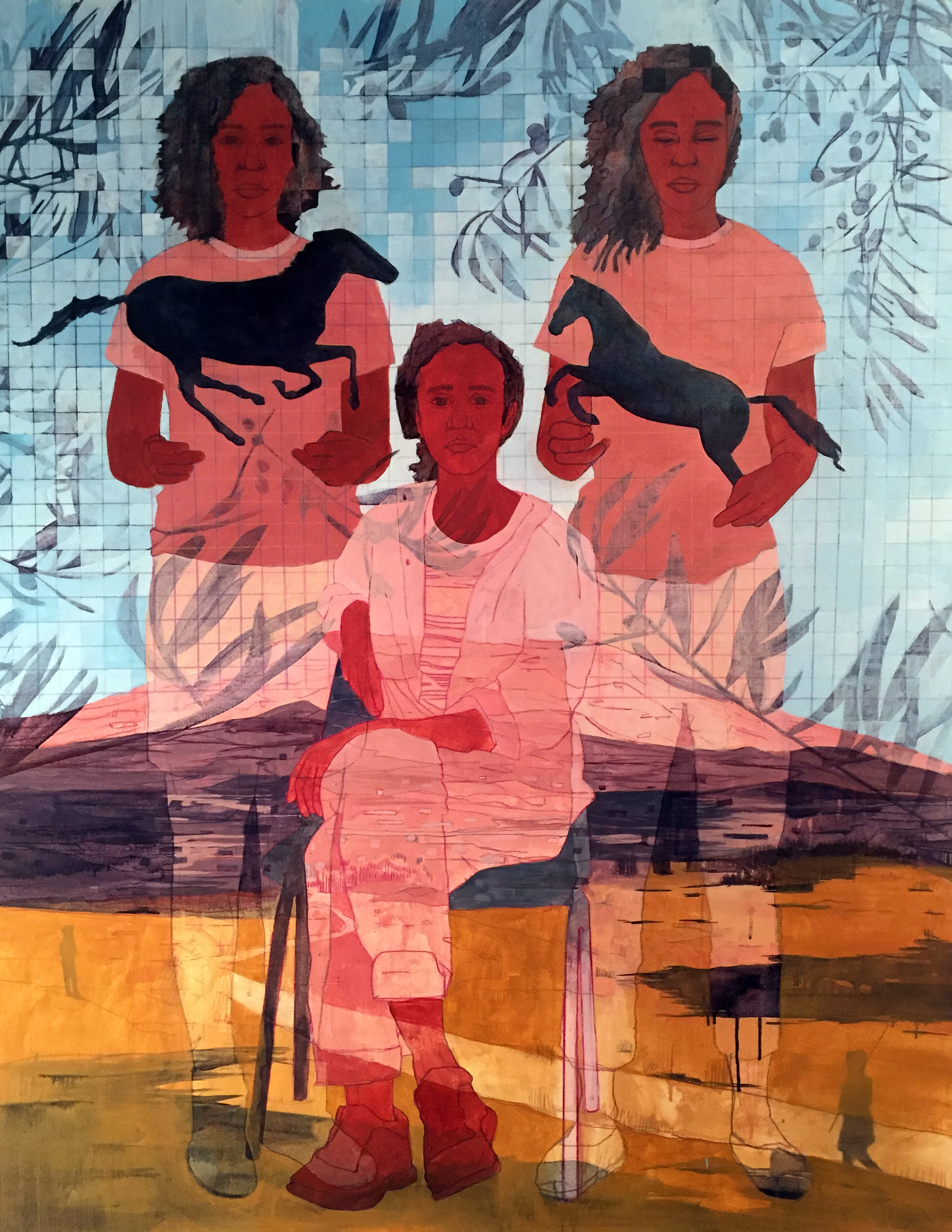
Pamela Phatsimo Sunstrum Pamela
Phatsimo Sunstrum is another artist working with photography, though
not in the way you may have in mind. Instead, the Botswana artist turns
to early 19th-century studio portraits of black and brown bodies shot
against kitsch hand-painted landscapes as the inspiration for her recent
work. Working in pencil and acrylic, she reinvigorates the images with a
surreal balance of vivid and shadowy tones to create images in which
familiar markers of time or place are removed. Elsewhere, her subjects
fade into the imagined landscapes they pose against, highlighting their
insignificance compared to the power and vastness of nature implied by
the sets. “I often think of the work of the very brilliant Kodwo Eshun,
especially his writing on the 'futures industry' that has been and
continues to be at work casting Africa’s future as already apocalyptic,
politically, economically and ecologically fraught,” Pamela explains.
“It is my intention that my work operates as a sort of navigational
device, a signal that it is still possible for us to imagine and occupy
radical new futures.”
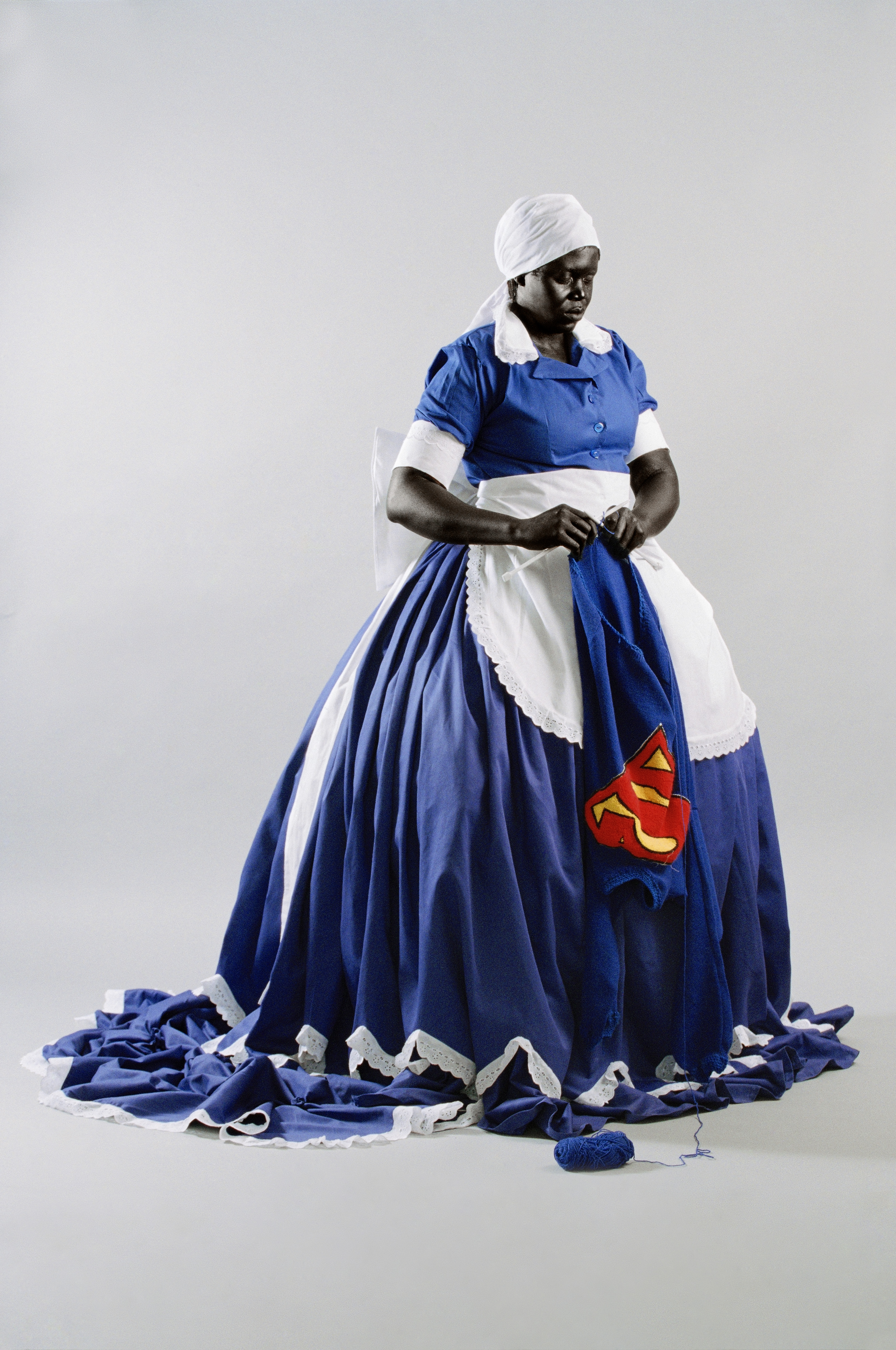
Mary Sibande
Mary Sibande’s I Came Apart At The Seams,
a solo exhibition now open in Somerset House’s Terrace Rooms, brings
together three of the esteemed South African artist’s bodies of work: Long Live the Dead Queen (2008-13), The Purple Shall Govern (2013-17) and In the Midst of Chaos There is Also Opportunity
(2017-) as well as new photographic pieces that the artist has begun to
refer to as the ‘red’ series: “It’s a colour that for me strongly
symbolises rage, resentment and frustration, and an atmosphere of which
has remained far too prevalent in contemporary South African society,”
she explains.
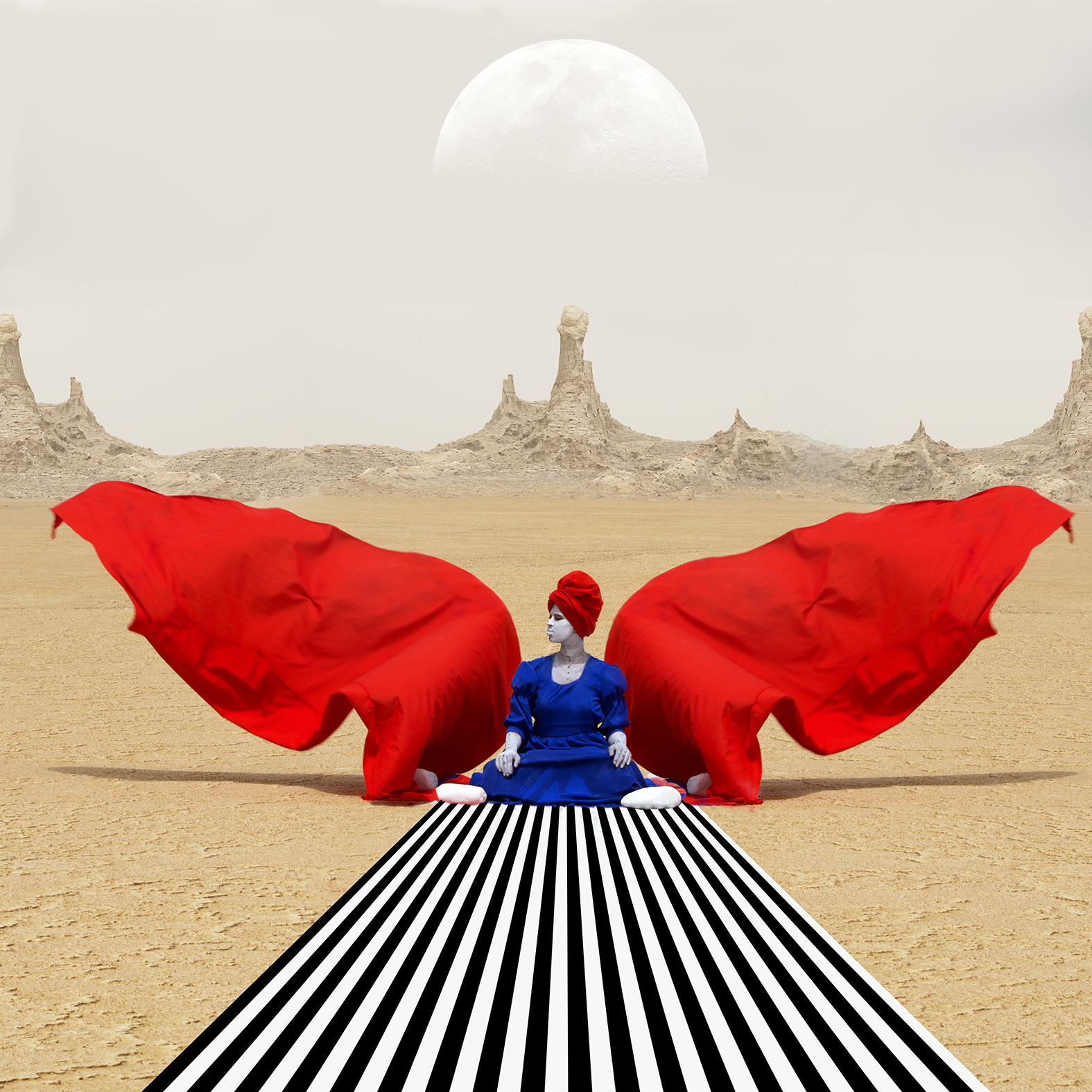
To create Water Life, a photographic series produced in collaboration with WaterAid and the H&M Foundation,
Addis Ababa-based photographer Aida Muluneh travelled to one of the
hottest, driest places on earth. A landscape of endless salt-flats and
azure blue skies, far-stretching sands and rocky outcrops, Dallol in
Ethiopia’s Danakil Depression serves as the otherworldly backdrop for
the artist’s uniquely Afrofuturist vision. In her images, she combines
references to a pan-African cultural heritage—masks and head-wraps, for
example—with contemporary props like the canary yellow jerry cans used
by women across Africa to carry water. Though the images are arresting
in their presentation of a surreal environmental harshness, underscoring
the extent to which access to clean water is an issue that
disproportionately affects women, they also speak of their resilience
and power in the face of extreme conditions. “I’m not looking for the
exoticism of the woman. I’m looking for their strength,” writes Muluneh
in the exhibition’s wall text. “Women across the African continent play a
major role in society, but often their voices are the ones that are
missing.”