Thursday, 7 January 2021

Mickaël Bethe-Sélassié ~ 1951 - 2020 (French Version)

 Excuse me this is a Google Translate not a very good version of the French...I apologize but I had no help from friends because they where just TOO BUSY!

 
Rio, Brazil 1987


Le 5 décembre 2020, le monde de l'art a perdu l'un des artistes africains les plus par excellence, grand maître du papier mâché et prolifique dans ses œuvres, Mickael Beth-Selassie, est décédé à Paris d'une insuffisance cardiaque à l'âge de 69 ans. homme; ses personnages mythiques étaient appréciés de tous les âges et sa modestie était exceptionnelle. Il a accompli tant de choses au cours de sa vie en réduisant légèrement l'écart entre l'Afrique et l'Europe.


Né le 15 février 1951 à Dire-Dawa, un village reculé de l'est de l'Éthiopie. Il était le plus jeune de trois frères et sœurs. Son père travaillait dans le désert d'Ogaden, le cœur poussiéreux de l'État régional somalien ravagé par la guerre en Éthiopie. En 1953, à l'âge de 2 ans, le père de Mickaël meurt et sa mère sensiblement emmène la famille dans la capitale, Addis-Abeba. Où ils vivaient avec leurs grands-parents. Mickaël a été encouragé par sa mère catholique et était un élève passionné au lycée Guebre-Mariam, où il a obtenu son baccalauréat en sciences. En 1971, Mickaël voyage grâce à une bourse à l'Université de Bordeaux puis à d'Orsay. En 1975, il fait une pause dans ses études et voyage à travers l'Europe.


En Éthiopie, en 1972-1974, il y a eu une famine dans le nord-est connue sous le nom de «Wollo Famine» et environ 80 000 personnes sont mortes. En février 1974, quatre jours de graves émeutes à Addis-Abeba ont fait cinq morts. Le pays s'est rapidement fragmenté. La révolution a éclaté et l'empereur Haile Selassie a été déposé et arrêté à la suite du coup d'État de la junte militaire dirigée par Mengistu Haile Mariam connu sous le nom de Derg. Mengistu est devenu président en 1977.


C'était un jour de Noël ennuyeux en 1981, dans le 13e arrondissement de Paris, ce sera un tournant dans la vie de l'Artiste, aujourd'hui âgé de 30 ans. Pour la première fois, il crée une série de panneaux pour sa chambre et il décrit la journée. comme le premier jour de ses efforts artistiques. Au début des années quatre-vingt, Mickaël décide de changer de direction des sciences aux arts. N'ayant aucune formation formelle, il est considéré comme un artiste autodidacte. Au début, il était attiré par la sculpture, mais il a trouvé que le travail avec de l'argile était trop restrictif en ce qui concerne l'échelle. Finalement, il a trouvé le médium idéal. Il était fragile mais robuste, l’idée de faire un cadre de travail faisait appel à la nature pratique de l’artiste et au caractère ludique de ce que certains pourraient considérer comme un médium pour enfants plutôt que pour adultes, il s’est mis à évoluer vers un Grand Maître du Papier Mâché ~


«Si les motifs et les thèmes qui l'ont inspiré ne sont pas immédiatement reconnaissables, ils ont été décrits comme totémiques et basés sur des sources éthiopiennes, en particulier des peintures coptes et le motif de la croix. Ses œuvres ont également été placées dans la tradition de Jean Dubuffet et de l'art brut, en partie en raison de leurs formes simplifiées et de leur qualité hautement expressive. Ses personnages aux couleurs vives et non naturalistes représentent une variété de types - royauté, guerriers, animaux - et les couleurs jaunes, bleues et fuchsia saturées des pièces semblent au moins aussi importantes que leurs formes ludiques. Mais ce serait une erreur de qualifier l'œuvre de Selassie d'art brut. Son intention est très sophistiquée, et le choix, par exemple, de son support, le papier mâché, est le résultat d'une longue quête et d'une décision de faire une déclaration politique sur l'Afrique dans son utilisation de matériaux bruts que l'on peut trouver n'importe où..» (Citation de Simon Njami de la Revue Noir)


Source:  Stadshof Collection

Ayant trouvé son support idéal, il a commencé à créer des créatures sauvages et vives qui étaient de grande taille mais légères et facilement transportables. Mickaël a expérimenté différents mélanges jusqu'à ce qu'il conçoive sa propre pâte unique. Son média était bon marché et facile à trouver, car le papier provenait de journaux abandonnés trouvés dans les rues parisiennes et les métros locaux. Il n'a jamais fait de croquis pour ses œuvres, car le processus de ses créations était beaucoup plus physique et celui du toucher plutôt que de la précision, comme un aveugle étudiant les reconnaissances faciales d'un étranger. Comme il l'a dit, «Sculpter une œuvre nécessite à la fois une force spirituelle et physique.»

Source: Le Salut au Soleil | Mickael Bethe-Selassie


Son art l'a emmené partout dans le monde et en 1987, Mickaël a passé un an au Brésil et ses grandes œuvres colorées se sont assis confortablement dans la ville du carnaval de Rio. Beaucoup de ses œuvres sont conservées dans diverses collections à travers l'Europe; Tropenmuseum à Amsterdam et la Fondation Stadshof en Belgique mais c'est à Paris que ses œuvres sont les plus appréciées. En 1992, il fait la couverture de la Revue Noir, qui a heureusement attiré l'attention de Pierre Bour, Directeur du Château de Ladoucette à Drancy qui plus tard, en 2017, a présenté une glorieuse rétrospective de 77 sculptures exposées dans 8 salles du Château.


En 2002, Mickaël se rend au Village Folklorique de Yongin en Corée du Sud et ses œuvres de Papier Mâché se transforment en bronzes. L'année suivante, en décembre 2003, le National Museum of African American History and Culture, une Smithsonian Institution a été créée et l'œuvre de Mickaël «Megalithe» a été achetée avec des fonds fournis par le Annie Laurie Aitken Endowment et au début de 2020, ses œuvres ont été présentées sur une couverture pour L'album de Peter Gabriel « Only Us ».


Source: Only Us | Art for Us

Sa contribution à l'art africain contemporain est colossale et sa gentillesse et son humilité nous manqueront certainement.

Saturday, 14 November 2020

The Dogon's Extraordinary Knowledge of the Cosmos and the Cult of Nommo


The Dogon’s Extraordinary Knowledge of the Cosmos and the Cult of Nommo

Source: Acient Origins

France, 1920: Marcel Griaule is a young man who is very well-established in his studies, especially in mathematics. He has recently served as a volunteer in the French Air Force and aspires to attend the prestigious Lycée Louis le Grande.

Although his future already seems marked, fate has other plans for him - a new road that begins to take shape when he decides to attend a conference that same year. The speakers are Marcel Mauss, anthropologist, sociologist, and historian of religions, and Marcel Cohen, linguist.

Griaule is struck by their words and decides to devote himself entirely to the study of anthropology. Between 1928 and 1933 he took part in two ethnographic expeditions, and in this period (1930) he came into contact with a mysterious African tribe: the Dogon.

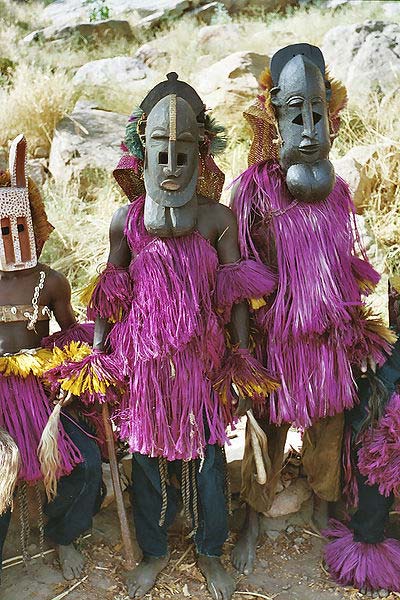
Dogon men in their ceremonial attire. (Devriese/CC BY 3.0)

Dogon men in their ceremonial attire. (Devriese/ CC BY 3.0 )

The opportunity was given to him during a period of study in Mali alongside his pupil Germaine Dieterlen, who was also a pupil of Mauss and deeply interested in the study of ancient myths. From that moment, the mystery of the Nommo is born. It is an element of an ancient heritage of which we cannot expand without having first spoken of the Dogon people.

One People, Many Mysteries

The Dogon are a tribe that lives in a desert land of Mali, near the border with Burkina Faso. It is a place that welcomed them after their escape to avoid the expansionist pressures of the medieval empires…we are around the year 1000, during the fierce battles on the banks of the Niger river.

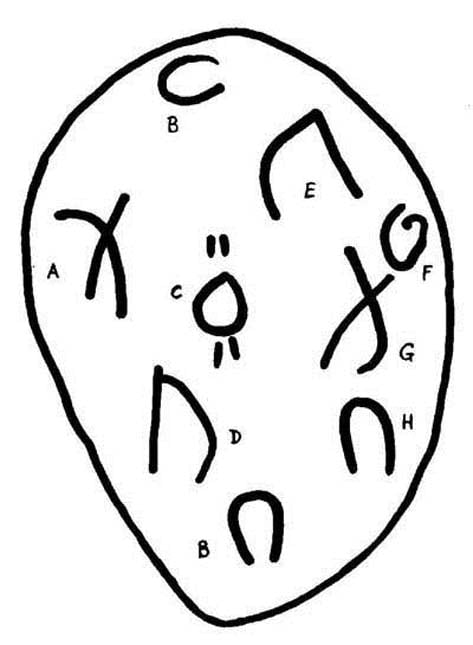
Many researchers have already discussed the range of mysteries that surround these people, but what interests us particularly for the development of the hypotheses contained in this article is their complex cosmogony, based on faith in a creative god, Amma, and in a creation produced by the movements of the “Egg of the World”.

A Dogon schematic of the “egg of the world”. (Nothing Too Trivial)

A Dogon schematic of the “egg of the world” . ( Nothing Too Trivial )

On the basis of these beliefs, the “Nommo”, the eight pro-genitors of the Dogon, brought to Earth a basket containing the clay necessary to build the grain stores of their villages. This image, which at first sight appears quite simple and devoid of particular significance, hides in reality a very profound knowledge of the universe and of the celestial bodies.

The granary represents the universe, its scales symbolize both the males and females that generated the Dogon and the various stars and constellations: in this sense we will find the Pleiades in the north, Orion in the south, and a comet in the west. So, everything started with a “basket”, or container, that carried life.


The Pleiades (Seven Sisters). ( Public Domain )

Dogon Astronomical Knowledge

But the thing that most struck the two scholars was the finding that, despite the Dogon having come into contact with our civilization in fairly recent times (about the beginning of the century), they possessed incredible scientific and astronomical knowledge. Some of this knowledge was certainly the result of a cultural heritage that is millennia old, but one element in particular has decidedly current characteristics - the detailed knowledge of the star Sirius.

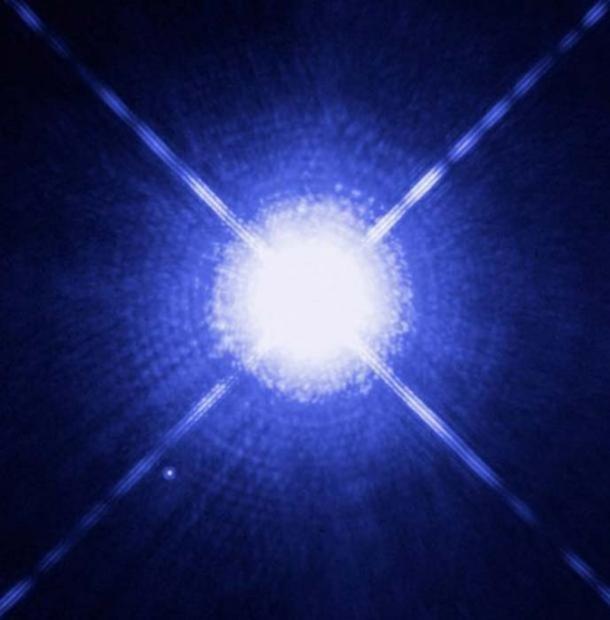
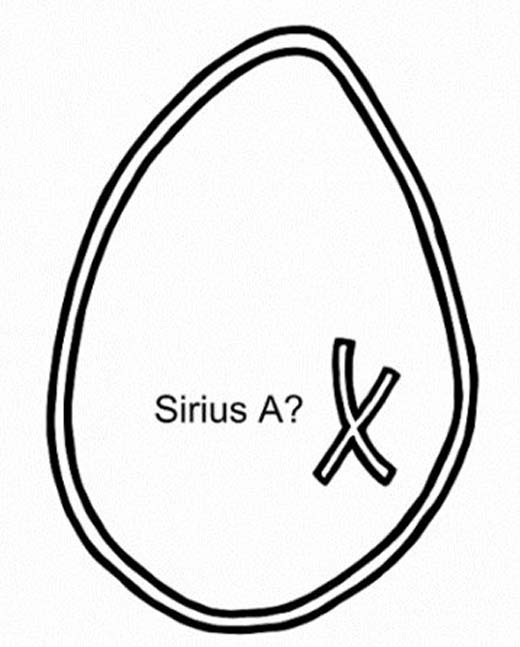
The Dogon were in fact aware of the fact that Sirius is a binary system (i.e. a system consisting of two stars, Sirius A and Sirius B); they were aware of the fact that Sirius B revolves around Sirius A with an elliptical orbit and over a period corresponding to 50 years; and the most disconcerting discovery was that the Dogon knew the exact position of Sirius A within the ellipse.


Sirius A and Sirius B as seen by the Hubble Space Telescope. The white dwarf can be seen to the lower left. (NASA, ESA, H. Bond/STScI, M. Barstow/University of Leicester/ CC BY 3.0 )

Many may wonder what is so disconcerting about all this? The amazement arises from the fact that it was only in 1862 when the American astronomer Alvan Clark deduced the existence of Sirius B using a telescope, among the most advanced for that era, and it was not before 1970 that there was confirmation of the existence of this star, not to mention a photograph of it.

Yet the Dogon knew of it hundreds of years before, and not only that, they called Sirius B with the name of “Po Tolo”; this name is certainly the most apt and shocking way to describe this system, the term Tolo, in fact, means star, while Po refers to a typical cereal that has the characteristic of being extremely heavy despite its small size; an expression, therefore, very close to reality since Sirius B is a white dwarf and, as such, has a very high density.

A Dogon diagram said to represent Sirius B’s elliptical orbit around Sirius A. ( CC BY SA 3.0 )

A Dogon diagram said to represent Sirius B’s elliptical orbit around Sirius A. ( CC BY SA 3.0 )

All this information is practically inaccessible without adequate astronomical equipment, and it is useless to specify that the Dogon had never come into possession of any such instrument, they even ignored its existence.

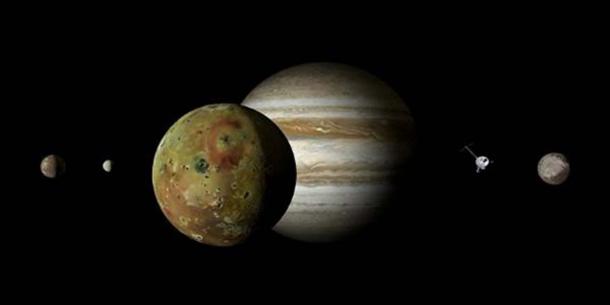
But the mystery does not end here, the Dogon, in fact, used to represent the planet Saturn as surrounded by a sort of halo, thus demonstrating that they knew of its rings; moreover, they knew that the planet Jupiter had around “four companions”, which correspond exactly to its four main moons.

An artistic representation of Jupiter and its moons. (CC0)

An artistic representation of Jupiter and its moons. ( CC0)

As if this were not enough, they depicted the Earth as a sphere and knew that this sphere revolves around its axis, and together with other spheres (the planets), around the sun; last, but not least, it is surprising that the Dogon, or in any case the elders of the village, described our galaxy as an immense spiral shape. We know very well that this concept began to be disclosed by Western astronomers only at the beginning of this century.

For the Dogon, Sirius B was the first star created by God and it represents the fulcrum of the Universe. All matter developed from it, including souls, following a complex spiral motion - the same that is symbolized in the intertwined baskets.

Saturn is surrounded by rings, Jupiter has four main moons, and four calendars are used: one for the Sun, one for the Moon, one for Sirius, and one for Venus. Needless to say, that the Dogon believe a truth attested from ancient times - the fact that the planets orbit around the Sun.

The Dogon know what, logically, they should not know; their knowledge is not the result of ancient legacies acquired by observing the sky and the stars with the naked eye, as happened in other civilizations, they simply “know”; this is the most disturbing part of the Dogon mystery.

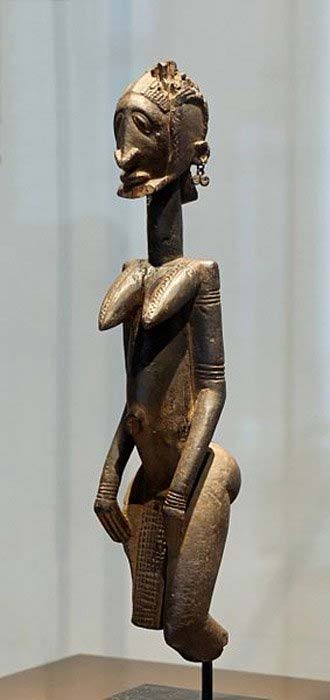
‘Master of the Slanted Eyes.’ Antropomorphic representation, probably a Dogon ancestor figure. (Public Domain)

‘Master of the Slanted Eyes.’ Antropomorphic representation, probably a Dogon ancestor figure. (Public Domain )

The Nommo Cult

An old Dogon legend tells of when the God of the universe, Amma, sent the Nommo to earth. This was a half-man, half-amphibian creature which landed in the land of the Fox, a territory northeast of Bandiagara, in the Mopti region; the Nommo was red, but when it touched the ground it became white.

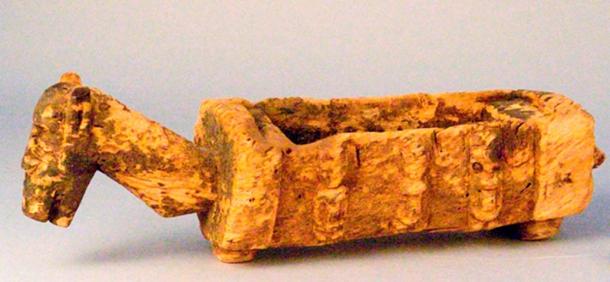
Mali, Dogon container This container shows the "Ark of the world", in which Nommo, the mythical progenitor of humanity, is supposed to have come down from the sky. (CC BY-SA 3.0)

Mali, Dogon container This container shows the "Ark of the world", in which Nommo, the mythical progenitor of humanity, is supposed to have come down from the sky. ( CC BY-SA 3.0 )

The name Nommo derives from a Dogon word that translates as “to do well”; much more often, however, this is remembered as “The Master of Water” (perhaps a reference to the fact that the Nommo could not survive out of water), the Admonitor, or the Destroyer.

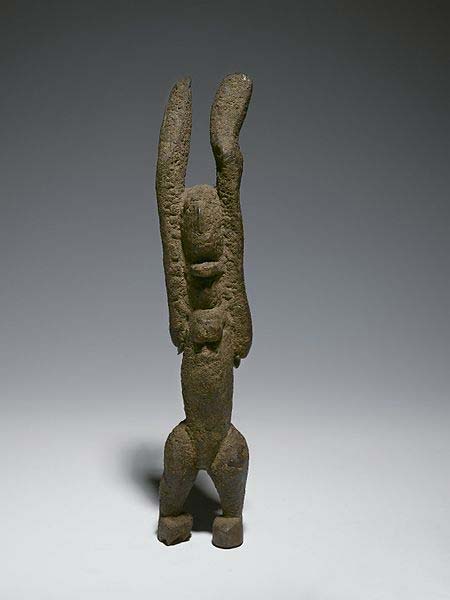
Nommo Figure with Raised Arms. (Brooklyn Museum/CC BY 3.0)

Nommo Figure with Raised Arms . (Brooklyn Museum/ CC BY 3.0 )

We do not know exactly how this figure can be placed in the various events that characterized the growth of the Dogon culture, but it is not so difficult to identify other very similar creatures in different cultures - not only geographically distant but also with respect to various historical moments.

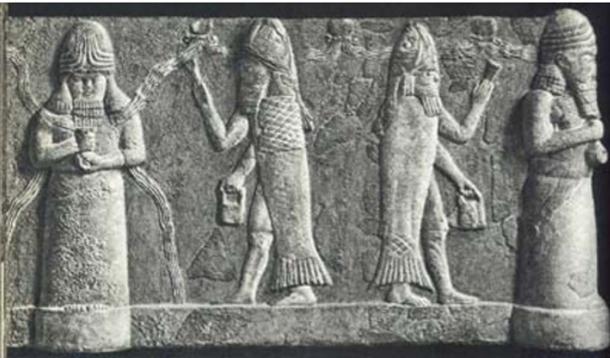
The same type of creature is present in a history of Mesopotamia written during the III Century BC from the priest Beroso; his name was Oannes, his body was similar to that of a fish, he lived only in water, and had feet similar to those of man. Are these images referring to the same event?

Oannes. (Dr.regosistvan/CC BY SA 4.0)

Oannes. (Dr.regosistvan/ CC BY SA 4.0 )

In any case, this ancient, almost primordial figure occupies a prominent place in all African cultures; not infrequently, for example, in the most internal areas of Africa. People belonging to monotheistic religions turn to the priests of the various villages because in situations of extreme difficulty they invoke the assistance of the Nommo.

Finally, let us not forget the God fish Dagon of the Philistines, and the same symbol of the fish which the first Christians used to represent their deity. Whoever or whatever it was, the Nommo still continues to lengthen its shadow on African territory, perhaps as a messenger waiting to be able to reveal ancient truths to those who have the courage and the predisposition of mind to listen to it.

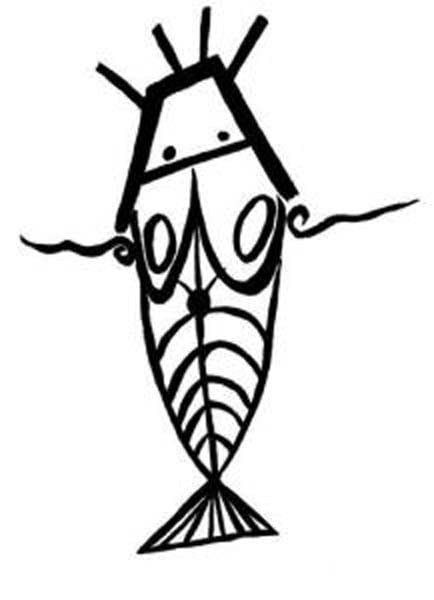
Nommo Archetype. (Nothing Too Trivial)

Nommo Archetype. (Nothing Too Trivial )

Top image: Dogon ritual dance, Mali. ( CC BY 2.0 )

By Roberto La Paglia

Roberto La Paglia is a contributing writer for the magazine Veritas Arcana  and this article has been republished with permission.

Saturday, 7 November 2020

BRAVE NEW WORLD by Aldous Huxley

Thinking about the importance of the Indigenous. The love of plants, the healing roots, leaves and barks of trees...We have lost our way in our Modernization of all things and we need to retreat and move backwards to see our way forwards. 

I am reminded of a story I heard in Ghana when an Humanitarian Group from Outside where so worried about the children suffering from water shortages and starvation and they demanded they stepped in to assist in this CRISIS. They went to the Chiefs and said, "You need Wells, you need clean water to save your people.." and the Tribal Elders said, "We will consult with our Gods." 

They consulted and came back to the Humanitarians and said, "Thank you for your concern but the Gods say we should leave you be!" 

But the Humanitarians wouldn't take that from the Village Elders thinking them primitive, cruel and foolish. So they went to the Higher Powers in Government to assist...They drilled out Wells and did what they could...and for sure...those that where suffering where made better but because of the fresh water more children where born and the population grew from 100 to 2,500 and the area had not changed. Eventually, the Well ran dry because of the demand and rather than 60 people dying now 2,025 people, men, woman and children where to died because of this act of human kindness. 

Listen to the Gods of Africa....

We have a responsibility of Birth Control and Death Control....This has been practiced throughout Africa with incredible success.

=========

I am keen for those throughout Africa to listen to a prophetic writer Aldous Huxley that wrote, Brave New World. This interview is so important to listen to as it seals Africa's fate if Africa is to go too quickly down the path of Commercial Development without proper risk assessments, sensible weighing up of the pros and cons, an holistic approach to African development with Western hindsight; otherwise it will be an absolute disaster. Learn from the mistakes made by those that qualify themselves as "Civilized" because now they are beginning to recognize that they have become over developed and are suffering the consequences of drug addiction, loneliness, depression, suicides and mental health issues on mass. The importance of Africa and the decisions made now will shape the world for our children, grandchildren and our tomorrow. The Power on earth lies in the hands of the Africans.


Here is another video but will take a lot of your Credit....but if you are rich in Africa check it out. 


Saturday, 17 October 2020

Cockatoo by Joe Pollitt


Cockatoo by Joe Pollitt | 2020


Cockatoo

In the foreground a nervous bobbing, large, white feathered, Cockatoo, gyrates backwards and forwards. Perfectly balanced on a weathered moss-infested farmhouse gate. The striking yellow plumage on the top of the head and neck rises, like a wave in the Pacific; the white froth, having been touched by the waning sun, creates the illusion of a freshly made lemon sliced omelette. All of a sudden the direction changes and so begins the bouncing; up and down, like a lone basketball in a well-oiled gym. The thuds of boom, boom, boom on the clean wooden floor. Watching these trance-like Cockatoo practices has somehow, become somewhat, hypnotic...Sleezzpp.

The strong talons grip to the rotting wood, holding onto the frame, perched on the sturdy far post. This firm grasp allows for a tiresome rocking movement, like a pyramid tempo on an upright piano. This rhythmical dance is an omen, an anxious preparation for the harsh months to come. This lively scene appears rather familiar, religious even, insinuating a ritualistic call for Prayer. A BIG shout-out for our weekly rations of consideration. Willing the world to go backwards in order to move forward.

The Cockatoo appears restless, lost in a daze in the unusual surroundings of the rows of moulting silver birch; their white barks slowly peeling away from the main, like tree-snakes. The sight is breath-taking! The painful shedding of wooden skin framed against the brightness of the illuminated forest.  Beams of light stream through thin and thick naked branches, the leaves of which, have long since fallen. Their purpose reassigned, transformed into muddy fertilizer underfoot, as autumn arrives in earnest. Snap! You're back in the room.

Listening to MALAA in SEINE, PARIS..


*N.B. 17/10/2020 Robert Blease 50th.


https://www.youtube.com/channel/UCQdCIrTpkhEH5Z8KPsn7NvQ


Cacatoès 

Au premier plan, un cacatoès nerveux, à grandes plumes blanches, tournoie d'avant en arrière. Parfaitement équilibré sur une porte de ferme infestée de mousse patinée. Le plumage jaune frappant sur le dessus de la tête et du cou s'élève, comme une vague dans le Pacifique; la mousse blanche, touchée par le soleil décroissant, crée l'illusion d'une omelette en tranches de citron fraîchement préparée. Tout d'un coup, la direction change et ainsi commence le rebond; de haut en bas, comme un ballon de basket solitaire dans une salle de sport bien huilée. Les bruits de boum, boum, boum sur le parquet propre. Regarder ces pratiques de cacatoès ressemblant à de la transe est en quelque sorte devenu hypnotique ... Sleezzpp.

Les fortes serres s'agrippent au bois en décomposition, s'accrochant au cadre, perché sur le solide poteau éloigné. Cette prise ferme permet un mouvement de bascule fastidieux, comme un tempo pyramidal sur un piano droit. Cette danse rythmée est un présage, une préparation anxieuse pour les mois difficiles à venir. Cette scène vivante apparaît plutôt familière, religieuse même, insinuant un appel rituel à la prière. Un GRAND merci pour nos rations hebdomadaires. Vouloir que le monde recule pour avancer.

Le cacatoès semble agité, perdu dans un état second dans l'environnement inhabituel des rangées de bouleaux argentés en mue; leurs écorces blanches se détachent lentement du corps principal, comme des serpents arboricoles. Le spectacle est à couper le souffle, l'effritement douloureux de la peau de bois encadrée par la luminosité de la forêt illuminée. Des faisceaux de lumière traversent des branches nues minces et épaisses, dont les feuilles sont tombées depuis longtemps. Leur but est réaffecté, transformé en engrais boueux sous les pieds, alors que l'automne arrive sérieusement. Casser! Vous êtes de retour dans la salle.