"THIS IS NOT GOOD FOR
AFRICA....NO GOOD...THE ARTISTS ARE ALL FALLING INTO COLONIAL
TRAPS...BLEACHED FOR A WHITE ART MARKET...HOW IS THIS AFRICAN ART?
NO....NO..NO THIS IS JUST NOT RIGHT...IN FACT, IT IS DISHONEST!
It
must be understood that South Africa is an entity unto itself. The
people of South Africa do NOT look up to Africa, they look up to Europe
and the US. They are totally obsessed with qualifications; most have
MFAs, PhDs even.....they have all been played for years. They are the
children of the "Abused"...these Artists can hardly reflect a complex
Continent as Africa. In their minds they are NOT African....they are
struggling to find what they are....but the answers do NOT lie in the
corridors of formal Colonial Institutions and between the pages of exam
sheets. The artists are just paying lip service to the old regime. Has
anybody seen the TOWNSHIP ARTISTS? This is where the life blood of South
Africa runs......devoid and uncontaminated from Institutional
Education. This is a huge subject which is just being skimmed upon and
represented so poorly in these pathetic toxic Art Fairs....
On
reflection, I guess these Artists do represent the Continent but in
ways I hadn't considered before. Is Africa going to be constantly ruled
by others? Is it going to be valued by what some outside exam board
thinks of them or what such established sites as Somerset House or the
British Museum say? The question is rock solid and hits at the heart of
the
matter....Who is to define the Continent? Are African Nations created by
the Collectors behind closed doors in Auction Houses? Let us be clear
here, it is the money that shapes the Cultural
Independence of Nations. That being the case, then "Independence" really
does mean absolutely nothing. Art is Power, it shows others what the
individuals of all the different 'made-up' countries of Africa, are
worth. It expresses the values held by Nations, so Art, in essence, is
far more than just objects strategically placed or blobs of paint on
prepared canvases, neatly framed.
Are we to support those that have
bought their tickets via Western approved degrees and further
educational qualifications, which can be marked down by those that have
the audacity to declare others, "Uncivilized"? The beauty of African Art
is it's openness, it's glorious primitive unpredictable nature. Sadly,
the Continent is still being controlled by vulgar outside forces. So we
have a parallel in place and it is rich vs poor, groomed vs
independent. If the Continent is to be truly free then it must be
defined by the authenticity of untrained artists? The financial
investments paid out by the Artists, has so far paid off, but that is
to the detriment of an entire Continent. Those with their tickets are
only holding up the rest, creating barriers for the determined honest
artists. The only country to grasp this concept is
Nigeria...the rest of Africa are decades behind and some may never
change. The rigid white frameworks that has been put into place and will
never allow it to be altered; there is simply too much at stake. What we
are witnessing today are just white masks on black faces.
I guess what I am trying to point out and fearful of is that perhaps, just maybe we are listening to the Rong Radio Station...
Personally, I would like to pay tribute to the greatest contributor to Africa. May the Gods Bless BISI SILVA. They broke the mold when they made you....you are one in a billion. XX"
these four women are changing the face of modern african art
"We’re
moving towards a time where we want a contemporary art world to be more
inclusive. I don’t think there’s a way back from this, it’s now and
it’s a reality.”
Whether
in fashion, music, or contemporary art, interest in work by creatives
based on, or hailing from, the African continent has never been greater.
But while the interest may be there, there are still relatively few
formal platforms dedicated to showcasing Africa’s artistic output. Where
contemporary art is concerned in particular, major fairs
disproportionately spotlight galleries and artists based in, or with
easy access to, more traditional art centres. There are of course
exceptions, but it was this general sense of infrastructural
disadvantage that encouraged Touria El Glaoui to found 1-54 London:
a contemporary African art fair held yearly at Somerset House over the
October Frieze weekend. “From the start, I had a mission to create the
platform for artists from the continent and the African diaspora,” she
reflects. “It was a response to the lack of infrastructure and voice for
these artists. We wanted to gather as many artists from the continent
as we could, and ensure that they are part of the narratives and
discourses around contemporary art that weren’t including them.”
Now
a key stop on the circuit for collectors, curators and fans of
contemporary African art, 1-54 has undergone exponential growth in seven
short years. It now hosts fairs in New York and Marrakech. But, as
discussions about the treatment of diversity and inclusion as trends
increase, is there a reason to worry that the current fever for African
art could be all but a passing fad? “I don’t really like the use of the
word ‘trend’ with regard to what we do. It would be unfair, in today’s
world, to deal with a contemporary art scene that doesn’t include
African or African American artists,” Touria tells i-D. “I think the
outlook is a good one: we’re moving towards a time where we want a
contemporary art world to be more inclusive. I don’t think there’s a way
back from this, it’s now and it’s a reality.”
As this year’s
edition wraps up, we take a look at some of the most exciting artists
whose work was shown at the fair, offering Western audiences an insight
into the wealth and calibre of African art.
Known
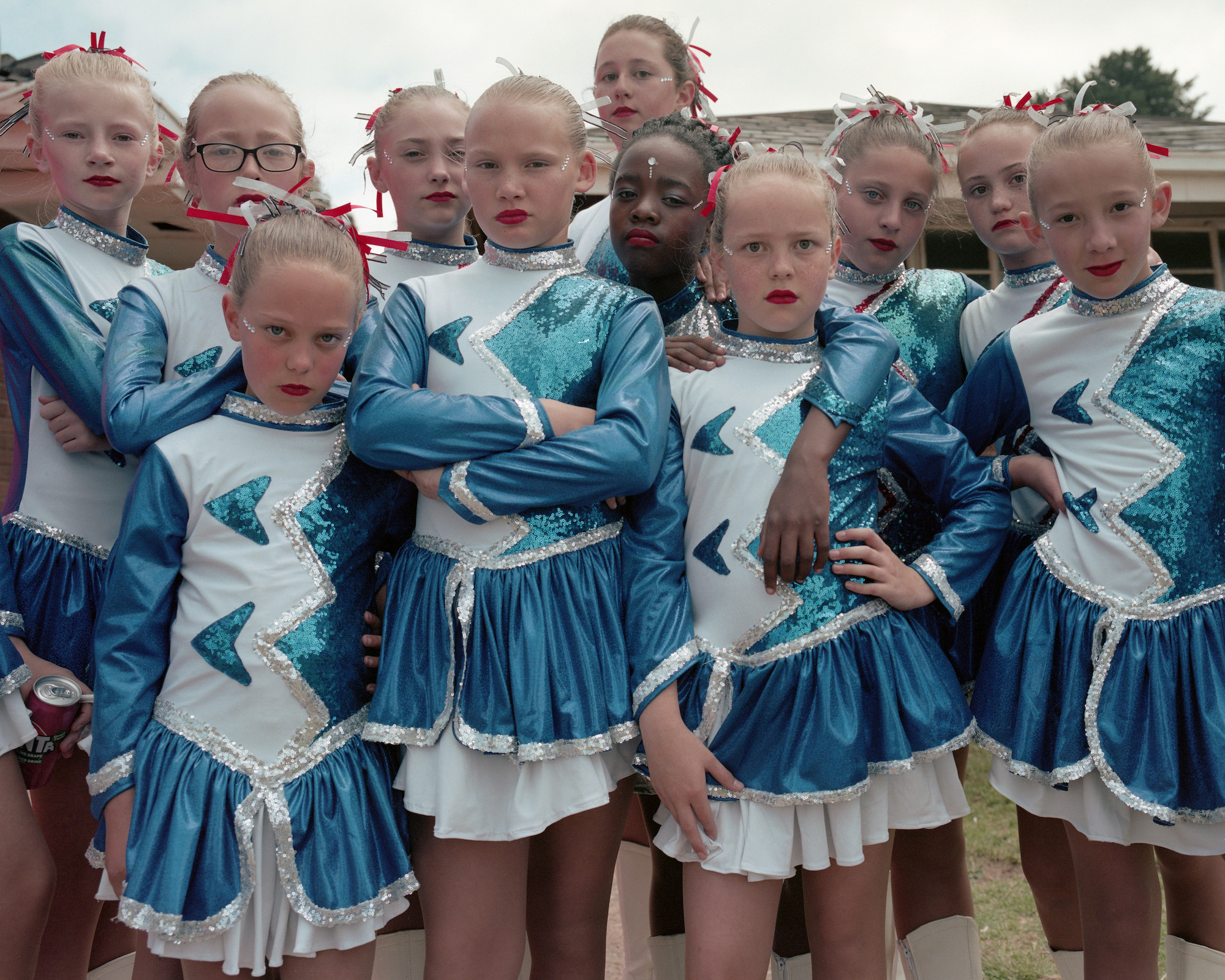
for her portraiture essays that put the collaborative nature of both
image-making and identity-making in focus, Alice Mann is quickly rising
the ranks of fine art photography. Her series Drummies
(2018), documenting young South African drum majorettes, many of whom
hail from some of the country’s most disadvantaged communities, earned
her the Taylor Wessing Portrait Prize in 2018. It was the first time the
prize has been awarded to a series rather than a single image. This
year, she picked up the Photography Grand Prix du Jury at the Hyères International Festival.
Capturing her subjects with a warm frankness, her work gives voice to
the importance of community in building an individual identity. “I’ve
always been interested in exploring how being part of a community offers
people a sense of belonging, and I think being able to find that space
is incredibly important… the need to belong is a feeling we can all
relate to,” Alice tells i-D. “‘Being part’ of a community really
embodies what collaboration is about… you are linked to other people in
some way, working together, having a common cause in mind. From my
experiences working with various groups of people, it’s been amazing to
witness how belonging to something, and being part of a community can
actively reinforce both group identity, but also positively affirm an
individual’s sense of self within that.”
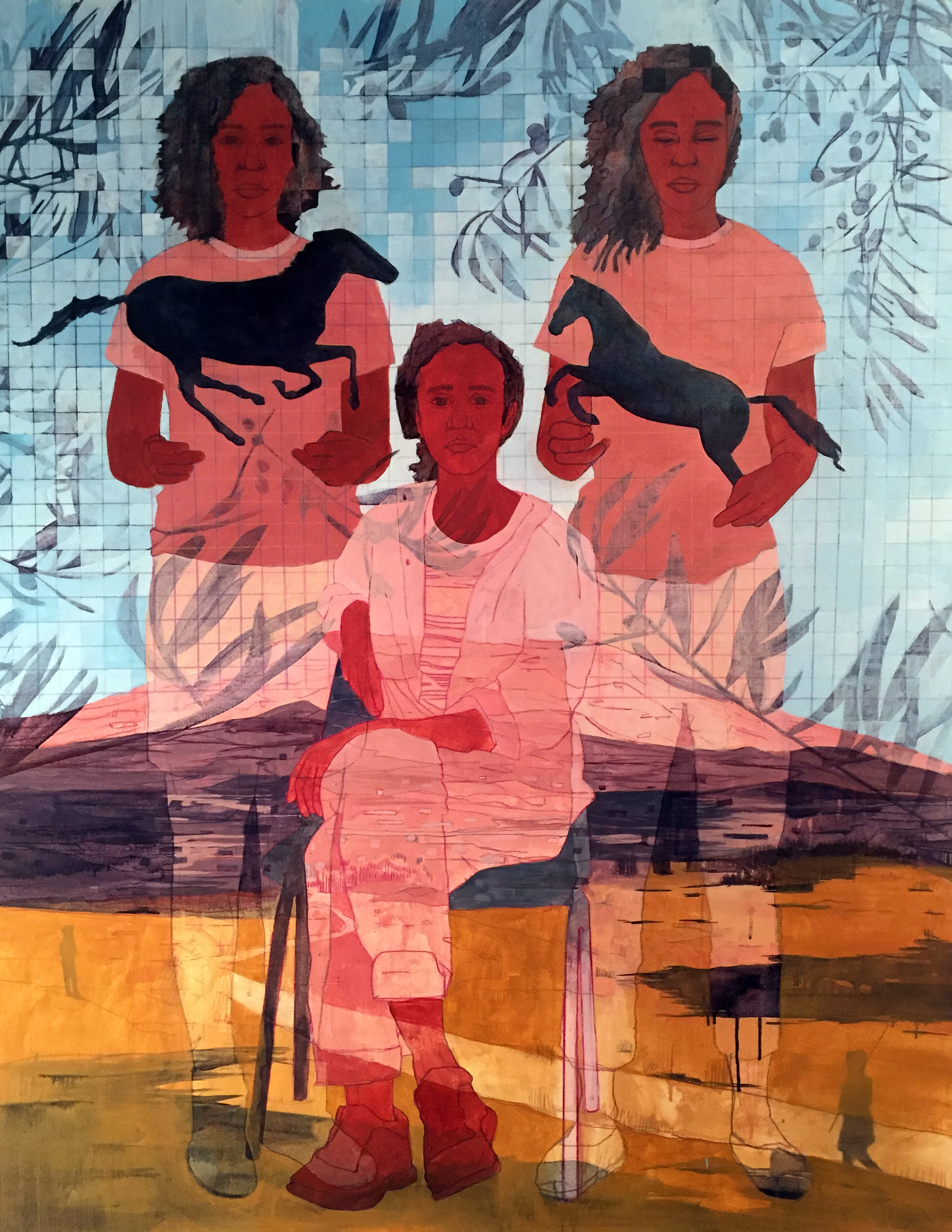
Pamela Phatsimo Sunstrum Pamela
Phatsimo Sunstrum is another artist working with photography, though
not in the way you may have in mind. Instead, the Botswana artist turns
to early 19th-century studio portraits of black and brown bodies shot
against kitsch hand-painted landscapes as the inspiration for her recent
work. Working in pencil and acrylic, she reinvigorates the images with a
surreal balance of vivid and shadowy tones to create images in which
familiar markers of time or place are removed. Elsewhere, her subjects
fade into the imagined landscapes they pose against, highlighting their
insignificance compared to the power and vastness of nature implied by
the sets. “I often think of the work of the very brilliant Kodwo Eshun,
especially his writing on the 'futures industry' that has been and
continues to be at work casting Africa’s future as already apocalyptic,
politically, economically and ecologically fraught,” Pamela explains.
“It is my intention that my work operates as a sort of navigational
device, a signal that it is still possible for us to imagine and occupy
radical new futures.”
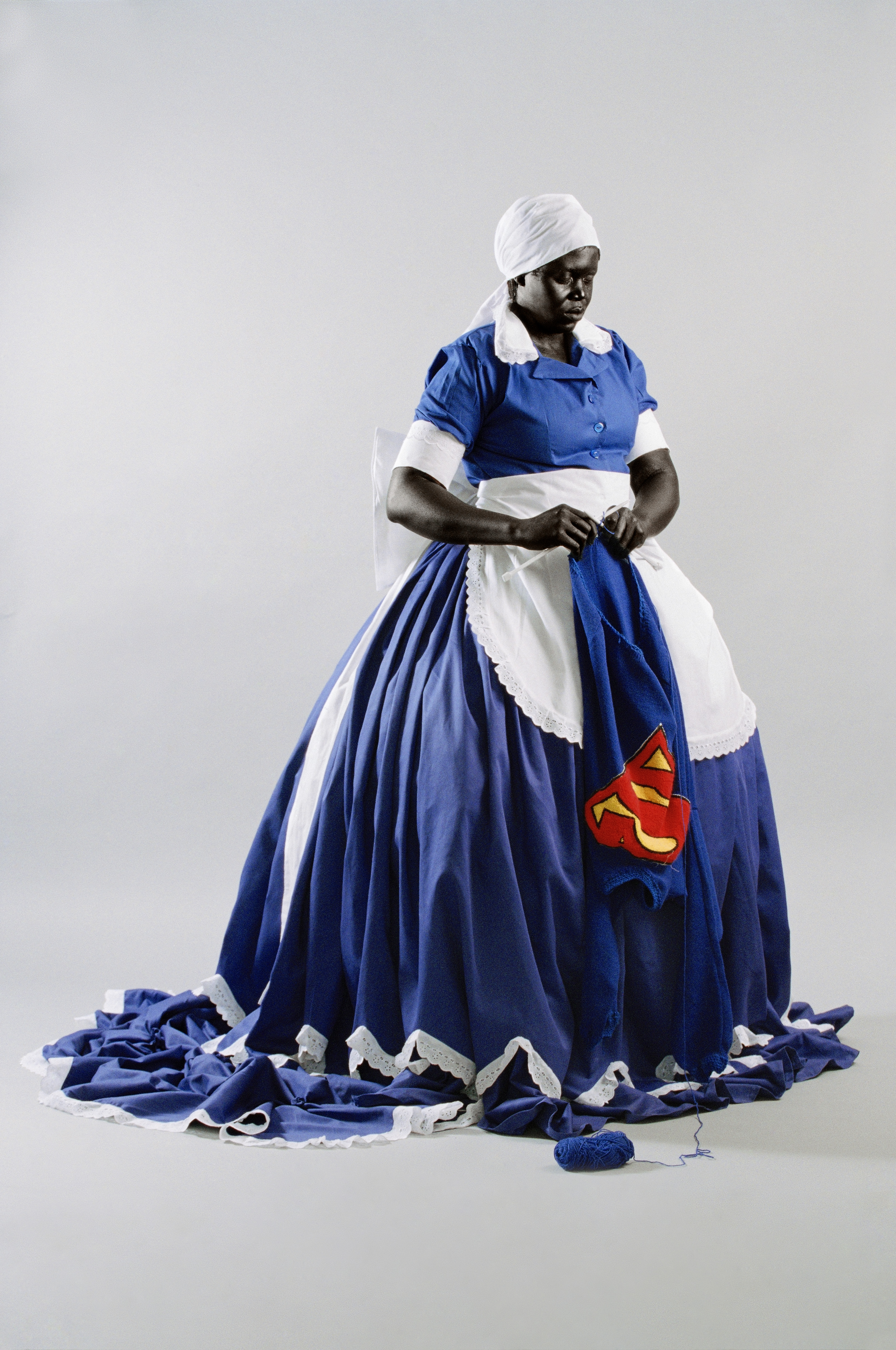
Mary Sibande
Mary Sibande’s I Came Apart At The Seams,
a solo exhibition now open in Somerset House’s Terrace Rooms, brings
together three of the esteemed South African artist’s bodies of work: Long Live the Dead Queen (2008-13), The Purple Shall Govern (2013-17) and In the Midst of Chaos There is Also Opportunity
(2017-) as well as new photographic pieces that the artist has begun to
refer to as the ‘red’ series: “It’s a colour that for me strongly
symbolises rage, resentment and frustration, and an atmosphere of which
has remained far too prevalent in contemporary South African society,”
she explains.
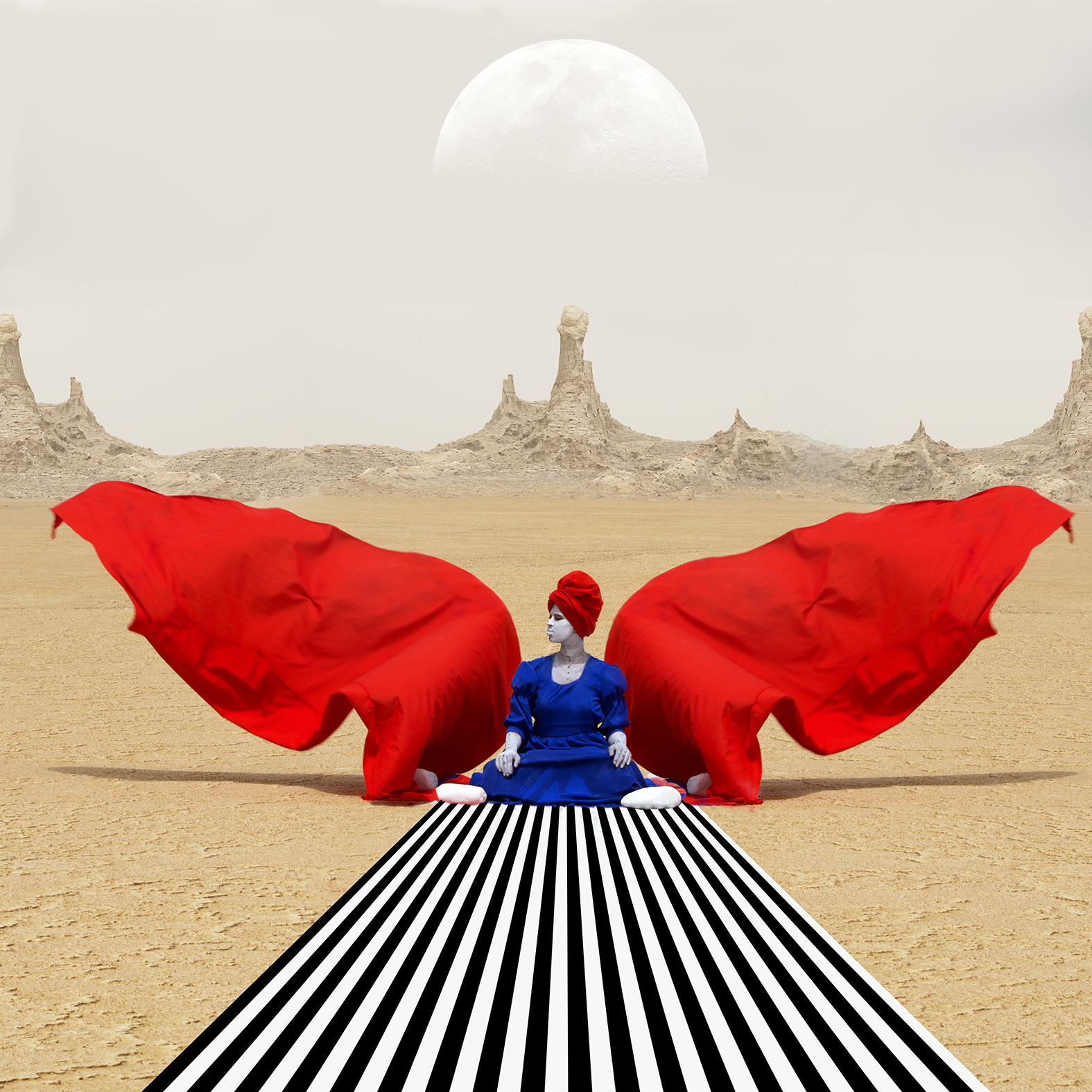
To create Water Life, a photographic series produced in collaboration with WaterAid and the H&M Foundation,
Addis Ababa-based photographer Aida Muluneh travelled to one of the
hottest, driest places on earth. A landscape of endless salt-flats and
azure blue skies, far-stretching sands and rocky outcrops, Dallol in
Ethiopia’s Danakil Depression serves as the otherworldly backdrop for
the artist’s uniquely Afrofuturist vision. In her images, she combines
references to a pan-African cultural heritage—masks and head-wraps, for
example—with contemporary props like the canary yellow jerry cans used
by women across Africa to carry water. Though the images are arresting
in their presentation of a surreal environmental harshness, underscoring
the extent to which access to clean water is an issue that
disproportionately affects women, they also speak of their resilience
and power in the face of extreme conditions. “I’m not looking for the
exoticism of the woman. I’m looking for their strength,” writes Muluneh
in the exhibition’s wall text. “Women across the African continent play a
major role in society, but often their voices are the ones that are
missing.”
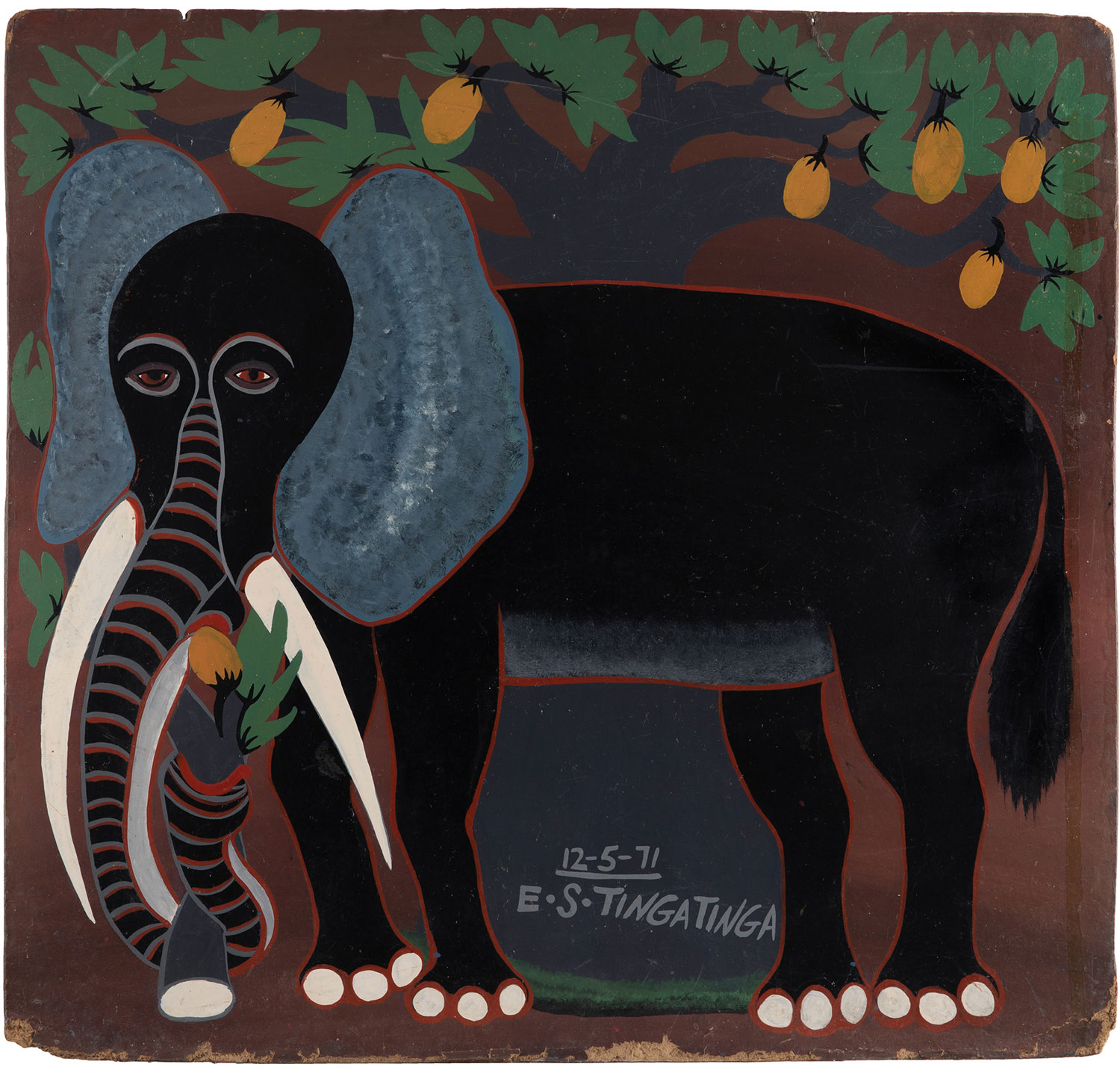
Edward Saidi Tingatinga, Untitled (Elephant Eating from the Marula Tree), 1971. Sold Ksh 5,635,200
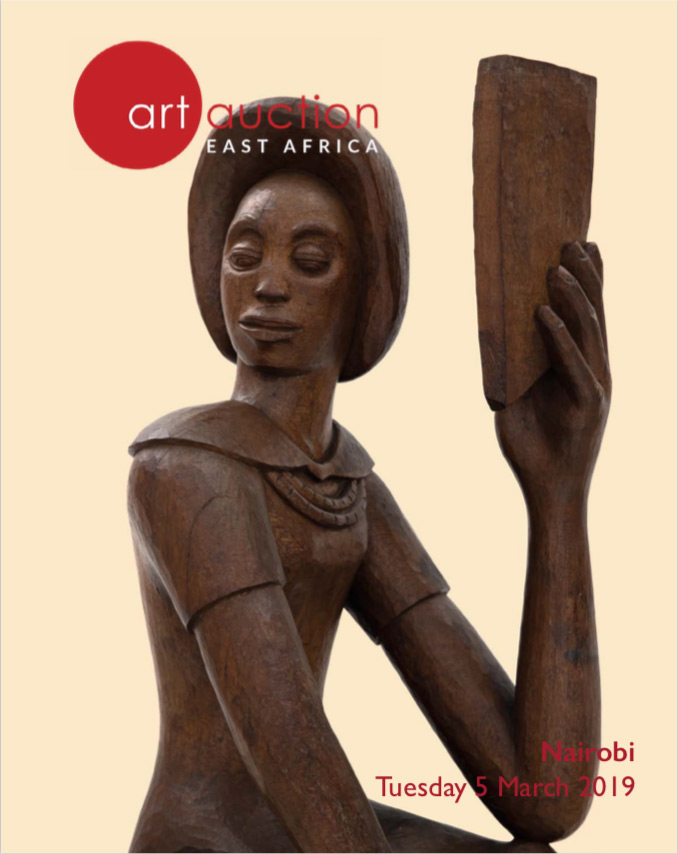
7.30PM on TUESDAY 5 MARCH 2019 at The RADISSON BLU HOTEL, NAIROBI
This year, we were invited to hold the Modern and Contemporary Art
Auction East Africa 2019 in the lovely ballroom at the Radisson Blu
Hotel in Upper Hill, Nairobi.
With 59 Lots from seven countries, we auctioned some rare and
exceptional sculptures this year; Lot 31 & 32 by the late master
sculptor Samuel Wanjau; and stunning, well priced paintings dating from
the 1960s to present. With an emphasis on modern and the secondary
market, we were able to find some very unusual works, such as Lot 29,
the Piano Player by Fabian Mpagi, and Lot 25 by the late Robin Anderson.
We welcomed KCB, Kenya’s largest bank, as our new partner, and new drinks sponsors, Glenfiddich whisky and Hendricks gin. Auctioneer, Chilson Wamoja, who has assisted us at all our auctions took the sale this year.
Record sales of USD 300,000 for 2019
The Sixth Art Auction East Africa 2019 was the record auction sale
since the auction began in 2013. Total sales exceeded KSH 30 million
(USD 300,000). 90% of the 59 Lots sold on the night, another auction
record.
I really like this interview with Jean Pigozzi. His Collection is really authentic and his earlier works pre-Internet are fantastic, it so rare to find African homegrown Art today. The support really goes to those trained in the West so this is so refreshing..
African Kuba Raffia & Cowrie Shell Dance Skirt - 1950s
Estimate | $4,000 - $5,000
Central Africa, Democratic Republic of the
Congo, Kuba, ca. mid 20th century CE. Framed Kuba cloth comprised of three
panels sewn together - each one presenting bold geometric patterns - a plethora
of diamond and chevron motifs - in warm earth tones: chocolate brown, tawny
red, and warm tan on a creamy beige ground. Traditionally, kuba cloth is woven
from raffia-tree leaves; this example is comprised of naturally colored fabric
created via a laborious process of hand-dyeing using mud, indigo, or the powdered
bark of the camwood tree. Such cloths are usually created by Kuba men on a
single heddle loom. Next they are embroidered by women and children to create
an uncut or cut-pile appearance (the latter resembling a velvet or velour
texture). Kuba cloths are worn during ceremonial events, especially funerals;
however, they are also found in tapestries and home furnishings. The abstract
geometric patterns are symbolic of an individual's social and marital status,
age, and/or personal attributes or character. Size: 20" W x 19.75" H
(50.8 cm x 50.2 cm); 25.25" W x 25.875" H (64.1 cm x 65.7 cm) framed
and here is another:
African Kuba Raffia & Cowrie Shell Dance Skirt - 1950s
African Kuba Raffia & Cowrie Shell Dance Skirt - 1950s
Estimate | $4,000 - $5,000
Africa, Democratic Republic of Congo, ca. 1950. A
traditional Kuba dance skirt (Tcaka) - handmade from raffia and hand-stitched
with immense artistry, presenting bold geometric patterns in warm earth tones -
rich browns and toasty almond beiges - as well as pops of more vibrant color -
magenta, blue, green, and pink. Such cloths are usually created by Kuba men on
a single heddle loom. Next they are embroidered by women and children to create
an uncut or cut-pile appearance. Highly decorative and created with painstaking
technique, this skirt presents panels of checkerboard patterns and an applied
overlapping zigzag/diamond motif comprised of pink, black, and houndstooth
fabrics. The trim is made of alternating passages of cut raffia pom poms and
cowrie shells. A particularly exceptional example given that it is made of
raffia, demonstrates immense artistry with intricate patterns, skillfully
executed weaving, beautiful hues, and also boasts a generous size and excellent
condition. Size: 260" L x 33" H (660.4 cm x 83.8 cm)
Kuba cloths are worn during ceremonial events, especially funerals; however,
they are also found in tapestries and home furnishings. The abstract geometric
patterns are symbolic of an individual's social and marital status, age, and/or
personal attributes or character.
There are several theories concerning the inspiration for Kuba style. One
theory suggests that the designs in Kuba textiles are rooted in tribal
scarification patterns. Another suggests that the motifs of Kuba textiles were
modeled upon those found in crop patterns. Still another suggests that the
source for their visual patterns was divine intervention. The creation of these
ceremonial wraps is a collaborative effort. Men are involved in all stages of
preparing the fiber and executing the weaving, whereas women soften the
textiles and apply the decoration. These coveted ceremonial textiles are worn
during ritual dances and special occasions such as festivals, weddings,
funerals, and initiation rites.
signed, titled and dated '“TIGER FALLS” Frank Bowling 1980' on the reverse acrylic on canvas 117.5 x 64.5 cm (46 1/4 x 25 3/8 in.) Painted in 1980. 20th Century Work of Art Estimate £40,000 - 60,000
Spanierman Modern Gallery, New York Private Collection, California
Catalogue Essay
‘In my youth I tended to look at the tragic side of human behaviour and
try and reflect that in my work, but gradually as I became more involved
in the making of paintings, I realised that one of the main ingredients
in making paintings was colour and geometry.’ - Frank Bowling
Undoubtedly
one of Britain’s finest formalist painters, Frank Bowling’s painterly
practice is currently being celebrated at the artist’s retrospective at
the Tate Britain this summer. Since the 1960s, Bowling has been testing
and stretching the possibilities of painting, continuing to experiment
with form and materials. Born in Guyana, Bowling moved to Britain as a
teenager and studied at the Royal College of Art in the early 1960s
alongside David Hockney and R.B. Kitaj. Although Bowling achieved early
recognition in London, he decided to move to New York in 1966 where his
paintings became less constrained by the representational. Pursuing
formalism on his own terms, Bowling built a tilting platform in his New
York and London studios that enabled him to pour paint from heights of
up to two metres, creating daring work that was the product of
controlled accidents.
The present work, Tiger Falls, was
executed in 1980, by which time Bowling had been refining his abstract
painting for a decade. Bowling’s deep understanding of the motion and
colour of paint is evident in this dynamic composition of violet and
ochre. Warm and cool hues are blended together, calmly spilling from the
top-left corner over the finely-dappled layers underneath. Unlike the
hard and rigid lines of American abstraction, visible in the work of
Morris Louis or Kenneth Noland, Tiger Falls is an exploration
into both the formal materiality as well as atmospheric suggestiveness
of paint. In unison with the title, Bowling’s application of the medium
is an organic mixture of impasto and thinner painterly washes, both
invoking the natural world. Retaining a captivating ambiguity, Tiger Falls transports us into the depths of nature, inviting the viewer’s eye to follow the cascades of paint in motion.
 Pamela Phatsimo Sunstrum
 Mary Sibande
 Aïda Muluneh